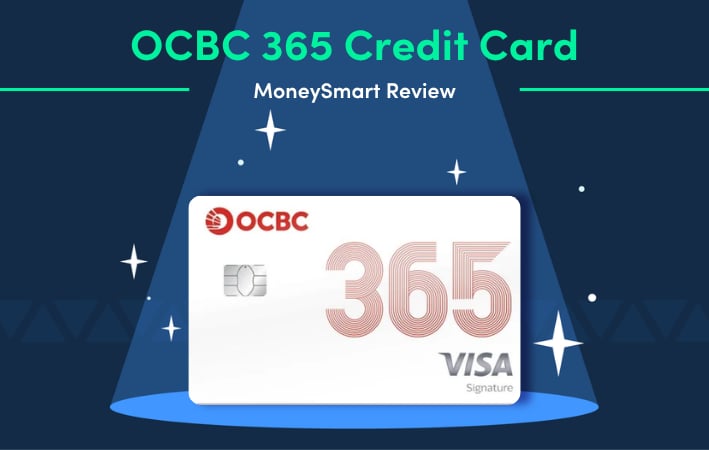
A few months ago, I cancelled my OCBC 365 Credit Card. Today, I regret it.
That’s because OCBC has just given the card a serious upgrade. From 1 November 2026, dining, groceries, land transport, and petrol all earn 6% cashback, up from 3–5% on 3 of those 4 categories. Fast food now counts as dining too, so that late-night drive-through run finally pays off.
The cashback structure is simpler as well. Instead of 2 tiers, there’s just 1: spend S$800 a month and you can earn up to S$160 cashback a month. That’s the same cap you used to need S$1,600 in spending to unlock.
It’s not all good news, though. Recurring bills, streaming subscriptions, and EV charging have dropped to the 0.25% base rate, and the 3% on Watsons ends after 31 March 2027. In other words, the card now rewards fewer things, but it rewards them much better. Here’s everything that’s changed, and whether the OCBC 365 deserves a spot in your wallet.
See our credit card ranking rubric to find out how we rank credit cards.
1. OCBC 365 Credit Card—summary

- Cashback on Dining, Groceries, Land Transport & Petrol
- 6%
- in Singapore & Overseas
- Earn on Eligible Spends
- Monthly Cashback, with no category caps
- Up to S$160
Get $200 Cash or 3,000 SmartPoints (enough to redeem an AirPods 5 worth S$219) when you apply and spend a min. of S$400 within 30 days! T&Cs apply.
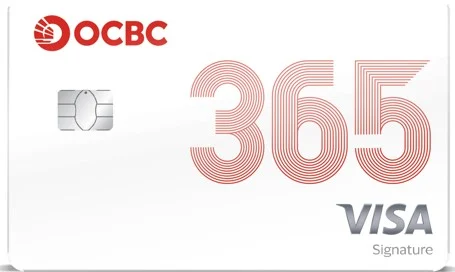
The OCBC 365 Credit Card is a cashback card designed for everyday life. Rather than rewarding a single niche category, it focuses on the things most Singaporeans spend on week in, week out: eating out (fast food included), ordering in, grabbing groceries, filling up the car, and getting around by bus, MRT, taxi, or Grab.
The structure is simple: spend at least S$800 in a calendar month to unlock the bonus cashback rates, with total bonus cashback capped at S$160 a month.
If you don't hit the S$800 minimum in a given month, you'll still earn the base rate of 0.25% cashback on eligible transactions.
One of the nicest things about this card is how cashback works: it's fully automatic. Cashback earned on your transactions in the current month is credited directly to your OCBC 365 card statement the following month. No points to redeem, no portals to navigate, no expiry dates to stress about. It just appears on your statement.
What changed from 1 November 2026
Until 31 October 2026 | From 1 November 2026 | |
|---|---|---|
Cashback structure | 2 tiers based on monthly spend | 1 tier |
Minimum spend | S$800 or S$1,600 | S$800 |
Monthly cashback cap | S$80 or S$160 | S$160 |
Dining | 5% (fast food excluded unless ordered via delivery apps) | 6% (fast food included) |
Groceries | 3% | 6% |
Land transport | 3% | 6% |
Petrol | 6% | 6% |
Watsons | 3% | 3% until 31 March 2027; 0.25% from 1 April 2027 |
Recurring telco and electricity bills, streaming, EV charging | 3% | 0.25% (base rate) |
Advertising platforms | 1% (0.5% per instalment) | No change |
2. How the OCBC 365 Credit Card works
The OCBC 365 Credit Card earns you cashback—a straightforward percentage of your spending returned to you as a credit on your card statement.
There are 2 levels of cashback. The base rate of 0.25% applies to eligible transactions outside the bonus categories, and to everything if you don't hit the minimum spend. Once you clear $800 in qualifying spend in a calendar month, the bonus cashback rates kick in across the card's eligible categories (more on those in the next section).
Cashback earned by both the principal and supplementary cardholders is pooled together and credited to the principal cardholder's account. So if you've added a family member on a supplementary card, their spending counts towards both the minimum spend threshold and the cashback cap.
The maximum bonus cashback the account can earn in any calendar month is S$160. You unlock it with just S$800 in qualifying spend, but to actually hit the cap, you'd need to spend about S$2,667 a month in the 6% categories.
3. What counts as eligible spend?
This is probably the most important section to read carefully. Cashback is awarded based on each merchant's Merchant Category Code (MCC), a 4-digit code assigned by the merchant's bank, not by OCBC. So where you spend matters, but so does how the merchant is coded.
Cashback categories
Category | Cashback rate | Notes |
|---|---|---|
Dining | 6% | MCC 5811 (Caterers), 5812 (Eating places and restaurants), and 5814 (Fast food restaurants), locally and overseas. Food delivery counts when processed under these MCCs. Excludes hotel dining and wedding banquets not classified under these MCCs, and telephone or mail orders |
Groceries | 6% | MCC 5411 (Grocery stores and supermarkets), locally and overseas |
Land transport | 6% | MCC 4011 (Railroads), 4111 (Local and suburban commuter transport, including ferries), 4112 (Passenger railways), 4121 (Taxicabs and limousines), and 4131 (Bus lines). EZ-Link and Transit Link top-ups do not qualify |
Petrol | 6% | MCC 5541 (Service stations) and 5542 (Automated fuel dispensers), locally and overseas. Excludes fleet card top-ups (e.g. Abecha Esso Fleet Card, Speedpass) |
Watsons | 3% until 31 March 2027; 0.25% from 1 April 2027 | In-store and Watsons Online directly. Watsons purchases on Lazada, Shopee, or Amazon do not qualify |
Advertising platforms (full payment) | 1% | PropertyGuru, 99.co, EdgeProp, StreetSine, Facebook/Meta (MCC 7311). No minimum spend, no cashback cap. Payments via mobile wallets do not qualify |
Advertising platforms (instalment payment) | 0.5% | Same merchants as above, applied to each instalment amount. No minimum spend, no cashback cap |
Everything else | 0.25% | Base rate, no minimum spend needed. This now includes recurring telco and electricity bills, streaming subscriptions, and EV charging |
The 6% and 3% rates require the S$800 minimum spend and share the S$160 monthly cap.
A bonus for freelancers and small business owners
If you run your own business or freelance and regularly advertise on platforms like Facebook, Meta, PropertyGuru, 99.co, EdgeProp, or StreetSine, there's an extra perk here that most consumer cards don't offer. The OCBC 365 Card earns 1% cashback on advertising spend at these platforms when you pay in full, or 0.5% per instalment if you pay in instalments. There's no minimum spend required and no cap on how much you can earn from this category, so the more you spend on ads, the more you get back. It won't move the needle for casual users, but it's a genuinely useful benefit if digital advertising is a regular business expense.
Key exclusions to know
A few things worth flagging before you whip out the card:
Hotel dining and wedding banquets: Hotel restaurants and banquets are often billed under the hotel's MCC rather than a dining one. If they're not coded under MCC 5811, 5812, or 5814, you'll earn the base 0.25% instead of 6%.
Telephone and mail orders: Dining transactions made by phone or mail order don't qualify for 6% cashback.
EZ-Link and Transit Link top-ups: These do not qualify for the 6% land transport cashback. Tap your card or phone directly at the gantry instead.
Fleet card top-ups: Topping up fleet cards like the Abecha Esso Fleet Card or Speedpass won't earn the 6% petrol cashback.
Watsons on third-party marketplaces: Buying Watsons products on Lazada, Shopee, or Amazon does not qualify for the 3% Watsons cashback. You'll need to shop directly on Watsons Online or in-store, and only until 31 March 2027.
Merchants with unexpected MCCs: A merchant's MCC doesn't always match what it actually sells, and OCBC isn't liable if a merchant is coded inaccurately. It's worth checking your statement after your first few purchases at a new merchant.
Excluded transactions: Transactions on OCBC's Rewards Transaction Exclusion List don't earn any cashback and don't count towards your S$800 minimum spend.
ALSO READ: Pandapro vs GrabUnlimited—Only 2 Players, Which is More Worth it Now?
4. Fees, charges, and card eligibility
Card fees and charges
Fee type | Amount |
|---|---|
Annual principal fee | S$196.20 (2-year waiver; subsequent years waived with S$10,000 annual spend) |
Supplementary annual fee | S$98.10 |
Interest-free period | 23 days |
Annual interest rate | 27.78% |
Late payment fee | S$100 |
Minimum monthly repayment | 3% or S$50, whichever is higher |
Foreign currency transaction fee | 3.25% |
Cash advance transaction fee | 8% or S$15, whichever is higher |
Overlimit fee | S$50 |
Card eligibility
Minimum age: 21 years old
For Singapore citizens and PRs:
- Aged 21–54: minimum annual income of S$30,000
- Aged 55 and above: minimum annual income of S$15,000
For foreigners:
- Minimum annual income of S$45,000 with a valid Singapore Employment Pass
ALSO READ: How to Get Credit Card Annual Fee Waivers and Still Enjoy Rewards and Perks (Updated 2025 Guide)
5. Cashback calculation
Knowing the earn rates is one thing, but seeing them work in practice is another. Here's the same typical month of spending we used in our previous review, now under the new cashback structure.
Spending category | Amount spent | Cashback rate | Cashback earned |
|---|---|---|---|
Dining (restaurants, fast food, food delivery) | S$200 | 6% | S$12.00 |
Groceries | S$150 | 6% | S$9.00 |
Petrol | S$80 | 6% | S$4.80 |
Land transport (Grab, SimplyGo) | S$60 | 6% | S$3.60 |
Recurring bills (telco + streaming) | S$80 | 0.25% | S$0.20 |
Other spend | S$250 | 0.25% | S$0.63 |
Total | S$820 | S$30.23 |
In this example, the cardholder clears the S$800 minimum spend and earns about S$30 in cashback for the month, up from about S$24 under the old structure, even though the recurring bills now earn less.
If you spend heavily in the 6% categories, the ceiling is much higher: about S$2,667 a month in dining, groceries, land transport, and petrol gets you to the full S$160 cap, or S$1,920 a year.
And as mentioned earlier, cashback is credited automatically to your OCBC 365 card statement the following month. That means no redemption steps needed, and no points system to figure out.
6. Is the OCBC 365 Credit Card worth it?
Pros of the OCBC 365 Credit Card
6% across the categories that matter most. Dining, groceries, land transport, and petrol now all earn the same 6% rate. These are the everyday categories most of us spend on every month. You don't need to remember which category earns what.
Fast food finally counts. Under the old rules, most fast food chains coded under MCC 5814 earned just 0.25% unless you ordered via a delivery app. Now they're part of the 6% dining category, whether you dine in, drive through, or order in.
A simpler, more generous structure. There's only 1 tier now. Spend S$800 a month and you unlock the full S$160 monthly cap. No more pushing to S$1,600 just to double it.
Strong petrol savings. The 6% cashback on fuel at all petrol stations stacks on top of instant discounts at selected brands. At Caltex, you get 18% off for up to 22.92% in total savings. At Esso, it's 16% off for up to 24.24%, which includes a S$6 fuel voucher when you spend at least S$300 on fuel in a month and Esso Smiles points. At Sinopec's Bukit Timah, Pasir Ris, Yishun, and Woodlands stations, total savings go up to 33.20% on Sino Power 98 and Sino X Power. The exact rate depends on the station, fuel grade, and whether you pump on a weekday or weekend.
Automatic cashback with no expiry. Cashback is credited directly to your card statement the following month. There's nothing to redeem, no portal to log into, and no points that expire.
Cons of the OCBC 365 Credit Card
The S$800 minimum spend is non-negotiable. If you don't hit S$800 in qualifying transactions in a given month, all your spend drops to the 0.25% base rate. For lighter spenders or those with irregular months, this can be a frustrating cliff edge.
Bills, streaming, and EV charging got the axe. If you were using the OCBC 365 mainly for your telco bill, electricity bill, Netflix subscription, or EV charging, those now earn just 0.25%. You'll want to move them to another card.
The Watsons perk has an expiry date. The 3% Watsons cashback ends on 31 March 2027, after which Watsons spend drops to the base rate.
MCCs still matter. Hotel dining and wedding banquets often fall outside the eligible dining MCCs, and a merchant's code doesn't always match what it sells. It's worth checking your first few transactions at new merchants.
High interest rate. At 27.78% per annum, like most credit cards in Singapore, this card is best suited for those who pay their balance in full each month.
Checklist: is the OCBC 365 Credit Card for you?
- Do you spend at least S$800 a month on everyday categories like dining, groceries, transport, and petrol?
- Do you eat out or order in regularly, fast food included?
- Do you get around by bus, MRT, taxi, or ride-hailing?
- Do you drive regularly and fill up at petrol stations in Singapore or overseas?
- Do you want cashback that's automatic, with no points, no redemption, just a credit on your statement?
- Are you comfortable checking that your dining and transport spending qualifies under the right MCCs?
If you ticked most of these, the OCBC 365 Credit Card is likely a strong fit for your lifestyle.
ALSO READ: 8 Essential Tips for Comparing Credit Cards I Wish I Knew Earlier
7. OCBC 365 Credit Card promotion
- Cashback on Dining, Groceries, Land Transport & Petrol
- 6%
- in Singapore & Overseas
- Earn on Eligible Spends
- Monthly Cashback, with no category caps
- Up to S$160
Get $200 Cash or 3,000 SmartPoints (enough to redeem an AirPods 5 worth S$219) when you apply and spend a min. of S$400 within 30 days! T&Cs apply.
Applying through MoneySmart right now? Here's what's on offer:
MoneySmart exclusive (valid 1–30 November 2026):
- Receive S$200 cash via PayNow or 3,000 SmartPoints
- Available to new-to-OCBC credit card holders only (no existing OCBC credit card, and none closed in the past 12 months)
- Apply through MoneySmart and charge at least S$400 in qualifying transactions within 30 days of card approval
- Submit your claim within 4 weeks of receiving your Unique Redemption Code from OCBC via SMS (sent within 4 calendar months of meeting the minimum spend)
T&Cs apply. View the latest OCBC 365 Credit Card promo for full details.
8. Alternatives to consider
Not quite the right fit? Here are 3 alternatives depending on what matters most to you.
HSBC Live+ Credit Card
If you spend more on shopping and entertainment than on groceries and transport, the HSBC Live+ Credit Card is one to consider. It earns 5% cashback on dining, shopping, and entertainment (with up to 8% as a limited-time boost for new cardholders), plus 5% on fuel at Caltex and Shell. You'll need to spend at least S$600 every month in a calendar quarter to qualify, and cashback is capped at S$250 per quarter. For dining alone, the OCBC 365's 6% now beats the Live+'s standard rate.
Citi Cash Back+ Card
Prefer something genuinely fuss-free? The Citi Cash Back+ Card earns 1.6% cashback on all eligible spend with no minimum monthly spend requirement and no cashback cap. The rate is lower, but the simplicity is hard to beat, and it makes a handy partner for spending that falls outside the OCBC 365's bonus categories.

- Cash Back on Eligible Spend
- 1.6%
- Min. Spend per month
- S$0
- Cash Back Cap per month
- Unlimited
Get Guaranteed S$420 Cash or S$500 Amazon.sg Gift Card, or 6,140 SmartPoints (use SmartPoints earned to redeem the latest Apple products on our Rewards Store) when you apply & spend S$500 within 30 days! T&Cs apply.
UOB One Card
If you're a heavy spender with a family to feed, the UOB One Card offers up to 8% cashback on all grocery spend and up to 10% at McDonald's, Grab, SimplyGo, and Shopee. It also earns up to 4.33% on Singapore Power utilities bills, something the OCBC 365 no longer rewards. The catch: the cashback rates depend on hitting monthly spend tiers of S$600, S$1,000, or S$2,000, so it suits people who don't mind tracking their spending.
P.S. Here’s our MoneySmart credit card ranking rubric
In case you’re wondering, here’s how we decide on our credit card rankings.
Check out our ultimate list of credit card reviews for the low-down on credit cards in Singapore.
Found this article useful? Share it with your family and friends!
Related Articles