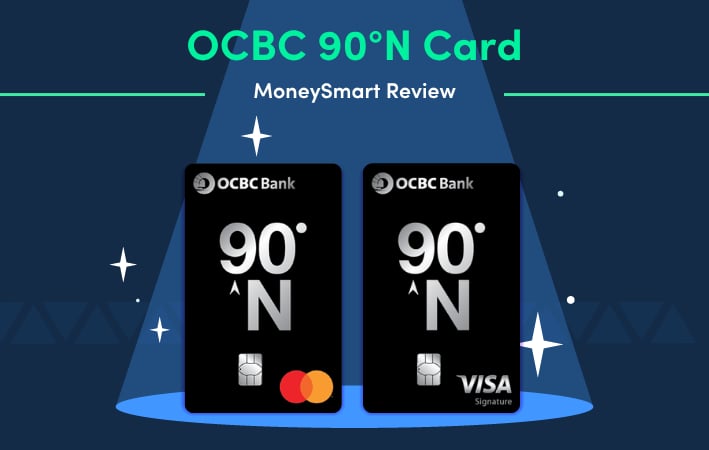
90 degrees North is the geographic coordinate for the North Pole—about as far as you can travel on this planet before you start heading south again. It's a fitting namesake for a card built around the idea of going the distance: the OCBC 90°N Card earns unlimited miles that never expire, so you can rack them up for years before cashing in on that big trip.
Available as a Mastercard or a Visa, the 90°N keeps its earn mechanic simple: 1.3 miles per dollar (mpd) on local spend, 2.1 mpd on overseas spend, and up to 7 mpd if you book through Agoda via the card's travel portal. Miles convert to KrisFlyer at a 1:1 ratio, or to 1 of 8 other airline and hotel partners, though most of those alternative partners come with weaker conversion rates.
But as with most travel cards, the fine print is where things get interesting. Between transfer fees, rounding rules, and a foreign currency charge that eats into your overseas earn rate, the 90°N asks a bit more patience of its cardholders than the headline numbers suggest. So is it worth going the distance for this one, or should you be eyeing a different miles card altogether? Let's break down the earn rates, fees, and fine print to find out.
See our credit card ranking rubric to find out how we rank credit cards.
[ms-toc title="OCBC 90°N Card review: Is it worth it for miles in 2026?"]
1. OCBC 90°N card—summary

- on Agoda accommodations worldwide
- S$1 = Up to 7 Miles
- on Foreign Currency spend
- S$1 = 2.1 Miles
- on Local spend
- S$1 = 1.3 Miles
Get $200 Cash or 3,000 SmartPoints (enough to redeem an AirPods 5 worth S$219) when you apply and spend a min. of S$400 within 30 days! T&Cs apply.
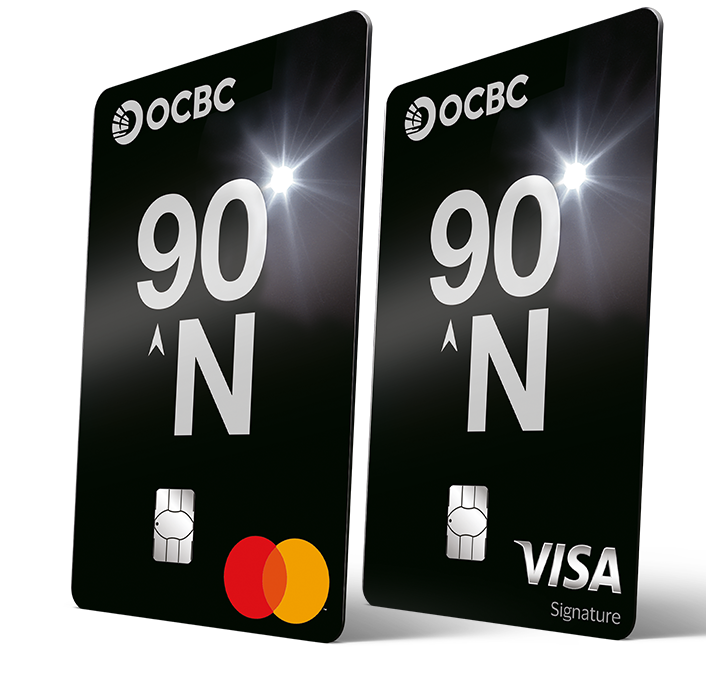
The OCBC 90°N Card is OCBC's flagship general-spending miles card, built for travellers who'd rather not track rotating bonus categories. You earn 1.3 mpd on local spend and 2.1 mpd on overseas spend, with no monthly cap—a genuine differentiator compared to cards like the UOB Visa Signature Card, which caps its bonus earn rate at $1,200 of spend per category each month.
Miles are called 90°N Miles and, notably, never expire while they sit in your account. This means you can stockpile them for years and only convert to KrisFlyer or another transfer partner when you're ready to redeem—though once you do convert to KrisFlyer, the standard 3-year KrisFlyer expiry clock starts running.
The card comes in 2 variants: a Mastercard and a Visa. Both share identical earn rates and fees, differing mainly in their airport lounge partnership (Mastercard Airport Experiences for the Mastercard version, DragonPass for the Visa version) and minor scheme-specific terms.
2. How the OCBC 90°N card works
Every dollar you spend earns 90°N Miles at a rate that depends on where the transaction is processed. Local spend (posted in Singapore dollars) earns 1.3 mpd, while spend processed in a foreign currency earns 2.1 mpd—even if you're physically in Singapore, as long as the transaction is billed in a foreign currency.
Miles are calculated in $5 blocks per transaction, rounded down. A $23 purchase earns miles as though you'd spent $20; a $4.90 purchase earns nothing at all. This makes the 90°N less forgiving for small, frequent purchases than cards that calculate miles to the cent.
Supplementary cardholders earn miles on their own spending, and these miles pool together with the principal cardholder's account under the same 90°N Miles balance. There's no cap on how many miles you or your supplementary cardholders can earn in a month.
Earning is only half the equation—you'll also need to convert your 90°N Miles before you can actually use them for a flight or hotel stay. 90°N Miles transfer to KrisFlyer at a 1:1 ratio, which remains the best-value option, or to 1 of 8 other airline and hotel partners at ratios that generally come with a haircut. Each transfer costs a flat $25 admin fee, so it's worth batching your conversions rather than transferring every time you cross the minimum.
Here is the full list of transfer partners:
Airlines:
- Singapore Airlines KrisFlyer
- Air France–KLM Flying Blue
- British Airways Executive Club
- Cathay
- Etihad Guest
- United MileagePlus
Hotels:
- ALL–Accor Live Limitless
- IHG One Rewards
- Marriott Bonvoy®
Since conversion ratios for the non-KrisFlyer partners aren't published upfront, it's worth checking the exact rate in the OCBC app at the point of transfer before you commit your miles.
3. What counts as eligible spend?
Key exclusions to know
- Cash advances, balance transfers, and instalment plans don't earn any miles, along with card fees, GST, and late payment charges.
- Bill payments made via internet banking are excluded—if you want to earn miles on recurring bills, you need to charge them directly to the card (or via a service like CardUp) rather than paying through your bank's bill payment portal.
- EZ-Link, Transit Link, and NETS FlashPay top-ups are excluded, along with top-ups to GrabPay, YouTrip, ShopeePay, and Singtel Dash. If you're topping up a transit card or e-wallet, don't expect miles.
- Government payments, insurance premiums, and education fees have historically been excluded when paid directly to the merchant (rather than via CardUp)—OCBC's terms note that MCC-based exclusions apply and aren't exhaustive, so it's worth checking the latest terms and conditions before assuming a specific merchant qualifies.
- Government payments, insurance premiums, and education fees can still earn miles if routed through CardUp, since CardUp itself is coded as a bill payment service rather than the excluded category.
4. Fees, charges, and card eligibility
Although we hope you’ll never have to pay card fees (yup, even for the annual fee since it can be waived!), here’s a list of fees to be aware of before you sign up for the OCBC 90°N card.
Fees
Eligibility
- Singaporeans and PRs aged 21 to 54: minimum annual income of $30,000
- Singaporeans and PRs aged 55 and above: minimum annual income of $15,000
- Foreigners: minimum annual income of $45,000
5. Miles calculation
Say you're a mid-career professional who spends moderately overseas and books the occasional hotel through Agoda. Here's what a typical month might look like:
Over a full year of similar spending, that works out to roughly 98,400 miles—enough for a one-way Economy redemption to a short-haul destination like Bangkok or Kuala Lumpur on KrisFlyer, which typically starts from around 10,000 to 15,000 miles depending on the route and season. Actual redemption value varies significantly by route, seat class, and award availability, so treat this as a rough guide rather than a guarantee.
Remember that converting these miles to KrisFlyer costs a flat $25 admin fee per transfer, so it pays to batch your conversions into larger lumps rather than transferring every time you cross the 1,000-mile minimum.
6. Is the OCBC 90°N card worth it?
To see how it stacks up, here's how the 90°N's earn rate compares with other general-spending miles cards in Singapore. None of these cards impose a minimum spend or monthly cap on their base local and overseas earn rates—only bonus rates come with the odd cap, noted below where relevant.
Rates shown are each card's standard base earn rates as of July 2026 and exclude time-limited promotions—check each issuer's site for the latest terms before applying.
On this comparison, the 90°N's local earn rate is roughly mid-pack, but its 2.1 mpd overseas rate trails the UOB PRVI Miles and HSBC TravelOne Cards, both of which earn 2.4 mpd.
Pros of the OCBC 90°N Card
- No monthly cap on miles earned, unlike some competing cards—the UOB Visa Signature Card, for instance, caps its 10X bonus rate at $1,200 of spend per category each month
- 90°N Miles never expire while sitting in your account
- Reasonable 2.1 mpd earn rate on overseas spend
- e-Commerce Protection safeguards online purchases against non-delivery or defective goods
- Renewal bonus of 10,000 miles when you pay the annual fee (principal cardholder only)
Cons of the OCBC 90°N Card
- $25 admin fee applies to every miles transfer, which erodes value for smaller, more frequent redemptions
- $5 spend-block rounding means small transactions can earn zero miles
- Minimum transfer of 1,000 miles before you can redeem with any partner, so you can't cash out small balances
- Most non-KrisFlyer transfer partners offer worse conversion ratios, narrowing your practical redemption options to KrisFlyer
Is the OCBC 90°N Card for you?
- You spend meaningfully overseas or in foreign currency and can absorb the 3.25% FX fee
- You'd rather earn steadily without tracking bonus categories or spend caps
- You book hotels through Agoda often enough to make the 7 mpd rate worthwhile
- You're comfortable batching miles transfers to minimise the impact of the $25 admin fee
If most of these apply to you, the 90°N earns its keep. If your overseas spend is light and irregular, a fee-free multi-currency card might serve you better for the FX side of things, even if it doesn't earn miles.
7. OCBC 90°N Card promotion
MoneySmart exclusive: Apply for the OCBC 90°N Card through MoneySmart between 1 and 31 July 2026, and you can get $250 cash or 3,900 SmartPoints (enough to redeem an Apple AirPods Pro 3 worth $349) when you spend at least $400 within 30 days of approval.
- You must be a new-to-OCBC credit cardholder, with no existing or closed OCBC credit card in the past 12 months
- Apply through MoneySmart to qualify
- Charge at least $400 in qualifying transactions within 30 days of approval
- OCBC will text you a Unique Redemption Code within 4 months of meeting the spend criteria—submit the MoneySmart Claim Form with this code within 4 weeks of receiving it
- Rewards are typically fulfilled 8 to 10 weeks after you submit the claim form
- on Agoda accommodations worldwide
- S$1 = Up to 7 Miles
- on Foreign Currency spend
- S$1 = 2.1 Miles
- on Local spend
- S$1 = 1.3 Miles
Get $200 Cash or 3,000 SmartPoints (enough to redeem an AirPods 5 worth S$219) when you apply and spend a min. of S$400 within 30 days! T&Cs apply.
8. Alternatives to consider
Citi PremierMiles Card—a solid pick if you want a broader spread of transfer partners at fair ratios, rather than relying mainly on KrisFlyer. It suits travellers who redeem across multiple airline programmes rather than sticking to one.
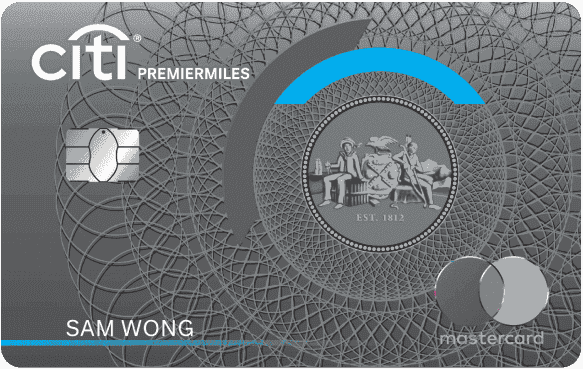
- Local Spend
- S$1 = 1.2 miles
- All Foreign Currency Spend including Retail and Online
- S$1 = Up to 2.2 miles
- Selected Online Hotel Bookings
- S$1 = Up to 10 miles
Snap up baseline gifts: be among the first 200 approved applicants spending S$500 to enjoy S$450 Upsized Cash or a S$500 Amazon.sg Gift Card, or still grab S$400 Cash or 6,140 SmartPoints (use SmartPoints earned to redeem the latest Apple products on our Rewards Store) if you come after.
But the real treat? Dive into spooktacular Halloween rewards with MoneySmart! Each day, the first 10 fastest claimants snatch exclusive Flash Deal prizes—from iPhone 18 Pro, MacBook Neo, Switch 2, PS5 and more—on top of your baseline reward! T&Cs apply.
UOB PRVI Miles Card—better suited to heavy overseas spenders, with a higher overseas earn rate that can outpace the 90°N's 2.1 mpd. Worth considering if most of your spend happens while you're actually travelling.

- on agoda and Expedia bookings via UOB PRVI Miles website.
- S$1 = Up to 8 miles
- on Overseas Spend
- S$1 = Up to 3 miles
- on Local Spend
- S$1 = 1.4 miles
[MoneySmart Offer]
Get guaranteed S$60 Cash - when you are a New-To-UOB customer and spend S$500 within 30 days! T&Cs apply.
Dive into spooktacular Halloween rewards with MoneySmart! Each day, the first 10 fastest claimants snatch exclusive Flash Deal prizes—from iPhone 18 Pro, MacBook Neo, Switch 2, PS5 and more—on top of your baseline reward!
HSBC TravelOne Card—a good fit if you want the widest selection of transfer partners and instant, fee-free transfers, even though it doesn't offer bonus categories. It suits readers who prioritise redemption flexibility over earn rate.

- on Local Spend
- S$1 = 1.2 miles
- on Foreign Currency Spend
- S$1 = 2.4 Miles
- Travel Insurance coverage, Airport Lounge visits
- Complimentary
Get S$400 Cash or 6,140 SmartPoints (use SmartPoints earned to redeem the latest Apple products on our Rewards Store) when you spend a min. of S$500 within 30 days from Card Account Opening Date!
Dive into spooktacular Halloween rewards with MoneySmart! Each day, the first 10 fastest claimants snatch exclusive Flash Deal prizes—from iPhone 18 Pro, MacBook Neo, Switch 2, PS5 and more—on top of your baseline reward! T&Cs apply.
So, is the OCBC 90°N Card worth it in 2026? For travellers who spend steadily overseas, don't mind batching their miles transfers to dodge repeated $25 fees, and like the idea of miles that never expire, it's a dependable earner. If your spending is light on overseas transactions or scattered across small purchases, the $5 rounding and transfer fees will likely eat into the value you'd otherwise get elsewhere.
Found this review helpful? Share it with a friend who's shopping for their next miles card.
P.S. Here's our MoneySmart credit card ranking rubric
In case you're wondering, here's how we decide on our credit card rankings.
Check out our ultimate list of credit card reviews for the low-down on credit cards in Singapore.
Related Articles