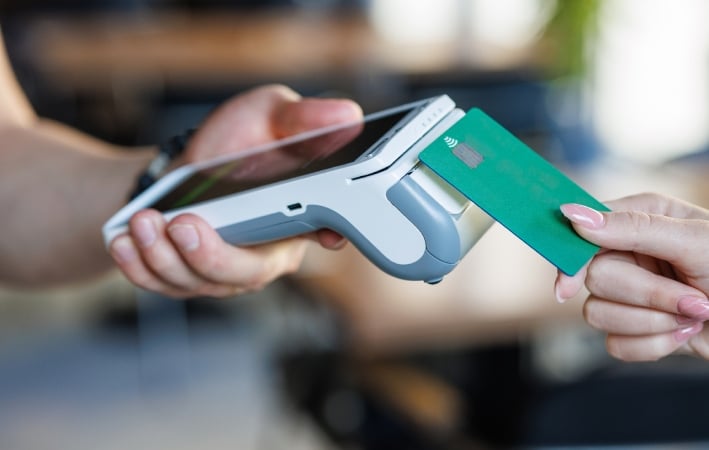
You’ve done your homework. You compared prices, checked that everything fits your budget, and now you can’t wait to put your new purchases to good use. You make your way to the cashier, take out your credit card, and bam: sorry, but there’s a surcharge if you pay by credit card.
Most of us would simply shrug and switch to PayNow or cash. But here’s the question: have you ever wondered why that credit card surcharge Singapore shops add exists, and whether it’s even allowed?
This guide explains what a card surcharge actually is, whether it’s legal, where you’ll most likely see one, and when it’s worth paying.
[ms-toc title="Can Shops Charge You Extra for Paying by Credit Card in Singapore? "]
1. What is a credit card surcharge (and is it the same as an admin fee)?
A credit card surcharge is an extra amount a shop adds only when you pay by card. If you pay with cash or PayNow, you won’t see it.
Here’s the thing: shops don’t always call it a credit card surcharge. You might see “credit card admin fee”, “card processing fee”, or “convenience fee” instead. In most cases, these are the same thing under different labels. The test is simple: if the charge only shows up when you pay by card, it works like a surcharge, whatever it’s called.
As for why it exists, every card payment costs the shop money. The card processing fee Singapore merchants pay their bank typically runs from about 1% to 4% of each sale, depending on the card and the payment provider. A surcharge is one way a shop passes that cost on to you.
2. Is a credit card surcharge legal in Singapore?
It’s the question most people ask: is a credit card surcharge legal in Singapore? No Singapore law outright bans it, so the honest answer is: it depends. Three sets of rules shape what shops can do.
Card network and bank rules. Card networks and the banks that supply shops with card terminals commonly restrict surcharging.
The Association of Banks in Singapore (ABS) said as far back as 2008 that merchant agreements don’t allow shops to impose additional charges on card payments.
So a shop that adds a surcharge may be breaching its contract with its bank, even if it isn’t breaking the law.
Disclosure rules. The Competition and Consumer Commission of Singapore (CCCS) Guidelines on Price Transparency say mandatory fees such as surcharges should be included in the headline price. If a fee can’t be worked out in advance, the shop should disclose it clearly and prominently alongside the price.
The guidelines also warn against “drip pricing”, where fees are added during the payment process, as a practice that could breach consumer protection law. They don’t mention card payments by name, but the principle applies: shops shouldn’t spring extra charges on you at the payment step.
PayNow is different. Merchants can’t surcharge PayNow payments. ABS, which owns the PayNow scheme, prohibits it, and banks can take action against shops that do, including ending their payment services. Card payments have no equivalent rule. If you’re surcharged on PayNow, you can give feedback to your bank or ABS.
3. Why do some shops charge extra for paying by card?
Card fees eat into margins, which is especially problematic for small businesses where the profit on each sale is already thin. A 2%–3% fee on a S$10 purchase sounds small, but it adds up across hundreds of transactions a month.
Some shops pass the fee on to card users instead of raising prices for everyone. The argument is that a customer paying by cash or PayNow shouldn’t subsidise another customer’s card rewards.
That’s a fair point from the shop’s side. However, it doesn’t excuse a fee that’s hidden until the last second. If a shop surcharges, you should know before you commit.
4. Where you’re most likely to see card surcharges in Singapore
Card surcharges tend to show up in a few places:
- Neighbourhood shops and minimarts
- Some clinics and service providers
- Renovation contractors
- Online bookings, especially travel
Some shops skip the surcharge and set a minimum spend for card payments instead, which has a similar effect on small purchases.
The red flag is timing. A fee that only appears at the payment step, after you’ve picked your items or filled in your details, is the pattern CCCS describes as drip pricing (unless there is a clear notice at the cashier or the booking page). At the cashier, you can usually switch to PayNow or cash before you pay. For online payments, check the final payment page before you enter your card details.
5. So, is it ever worth paying a credit card surcharge?
Sometimes. It comes down to rewards maths: does your card earn more on that spend than the surcharge costs? If it does, you come out ahead. If it doesn’t, you’ve paid extra for the privilege.
Here’s how it plays out on a S$1,000 purchase, using three cards from MoneySmart’s credit card listings. We’ve valued each mile at S$0.015, a middle-of-the-range figure (miles valuations range from just over S$0.01 for economy redemptions to S$0.02 or more for premium cabins; your own miles values will vary depending on the type of flights you usually book.)
Card | Earn rate | Rewards on S$1,000 | Net if surcharge is 1% (S$10) | Net if 2% (S$20) | Net if 3% (S$30) |
|---|---|---|---|---|---|
1.6% cashback | S$16 | +S$6 | -S$4 | -S$14 | |
1.2 miles per S$1 (local spend) | 1,200 miles (about S$18) | +S$8 | -S$2 | -S$12 | |
American Express True Cashback Card (values are only for new members, first 6 months) | 3% cashback on up to S$5,000 | S$30 | +S$20 | +S$10 | S$0 |
The break-even point is each card’s effective earn rate. Citi Cash Back+ earns 1.6%, so a 2% surcharge loses you S$4. At a S$0.015/mile valuation, PremierMiles works out to S$18, so a 2% surcharge loses you only S$2.
A welcome bonus changes the math: new American Express True Cashback Card members earn 3% on up to S$5,000 in the first 6 months, which covers even a 3% surcharge. After that, the card drops to 1.5%. Meanwhile, a 3% surcharge is a loss on the other two cards. Note: these figures ignore annual fees.
Bigger purchases show the trade-off more clearly. Say a renovation contractor adds 2% to a S$5,000 deposit. That’s a S$100 surcharge. On the Citi PremierMiles card, S$5,000 earns 6,000 miles, worth about S$90. You do lose S$10 on rewards, but the case for paying rests on protection, not points: paying by card gives you a way to dispute the charge through your bank if the work stalls-a common scenario in renovations.

- Cash Back on Eligible Spend
- 1.6%
- Min. Spend per month
- S$0
- Cash Back Cap per month
- Unlimited
Get Guaranteed S$420 Cash or S$500 Amazon.sg Gift Card, or 6,140 SmartPoints (use SmartPoints earned to redeem the latest Apple products on our Rewards Store) when you apply & spend S$500 within 30 days! T&Cs apply.
- Local Spend
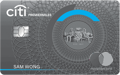
- S$1 = 1.2 miles
- All Foreign Currency Spend including Retail and Online
- S$1 = Up to 2.2 miles
- Selected Online Hotel Bookings
- S$1 = Up to 10 miles
Get Guaranteed S$420 Cash or S$500 Amazon.sg Gift Card, or 6,140 SmartPoints (use SmartPoints earned to redeem the latest Apple products on our Rewards Store) when you apply & spend S$500 within 30 days! T&Cs apply.
When it can make sense
- You’re chasing a minimum spend. If a surcharge helps you reach a welcome offer or fee waiver threshold that’s worth more than the fee, it can pay off.
- It’s a big-ticket purchase. Rewards scale with the amount, but so does the surcharge, so run the numbers on the actual total.
- You want the protection. For travel, renovation deposits, or anything you pay for well before you receive it, paying by card can give you a way to dispute the charge if things go wrong.
- There’s a generous sign-up bonus. A welcome offer can outweigh a small surcharge on the spend that unlocks it, as long as you’d have spent that amount anyway.
When it doesn’t
- The surcharge is higher than your card’s effective earn rate
- You could pay by PayNow, which can’t be surcharged
- The purchase is small and a flat fee outweighs the rewards
- The spend doesn’t earn rewards on your card
- You carry a balance, because interest will outweigh any rewards
The takeaway
Know your card’s earn rate, and you can decide at the till. After all, nobody wants to do rewards maths with a queue forming behind them. If the surcharge is lower than what you’ll earn, pay by card. If it isn’t, PayNow or cash is the cheaper move.
TLDR; to keep in mind:
- Ask before you pay. A shop should be able to tell you about any card charge upfront.
- Look for the disclosure. A fee that appears only at the last step is a red flag.
- Check how the fee is labelled. “Admin fee” and “processing fee” are still surcharges.
Related Articles