
Seeing your debts pile up? While we wouldn’t want to be in debt in the first place, some big ticket purchases would naturally lead us to have a bit of debt that would take time to clear.
Here’s where a balance transfer could help with repayments.
A credit card balance transfer lets you consolidate and move existing credit card debt onto a new balance transfer plan. It can come in handy in cases of emergencies or unexpected circumstances where you’ve had to pay a large sum of money that is more than what you have.
Usually there’s a promotion and depending on the promo mechanics, you may get an interest-free period or a lower fixed interest rate for a set number of months.
This can be useful if you need time to repay a large balance without immediately incurring the usual high credit card interest rate. However, balance transfers are not free money—there are usually processing fees, eligibility requirements and consequences if you still have an outstanding balance after the promotional period ends.
[ms-toc title="Guide to Credit Card Balance Transfers in Singapore"]
How does a credit card balance transfer work?
A credit card balance transfer lets you transfer existing debt onto another credit card or account, under a new repayment plan.
For example, imagine you have $5,000 outstanding on a credit card with Bank A. Instead of continuing to pay Bank A’s usual credit card interest rate, you apply for a balance transfer with Bank B.
If approved:
- Bank B transfers the approved amount towards your existing credit card debt.
- Your debt is now owed to Bank B under its balance transfer plan.
- You repay Bank B over the promotional tenure, such as three, six or 12 months, depending on the available plan.
- You may pay a one-time processing or transfer fee.
- If the balance is not fully cleared by the end of the promotional period, the remaining amount may become subject to the bank’s prevailing interest rate or other applicable charges.
Note that you can’t transfer a balance from a card issued by the same bank—has to come from a different bank's card.
Before you get too happy, a balance transfer doesn’t necessarily mean 0% interest.
Some balance transfer promotions are advertised as interest-free for a fixed period. Others charge a low fixed interest rate or apply a one-time fee that effectively becomes the cost of borrowing.
Even when the promotional interest rate is 0%, you may still have to pay a processing fee. This is why you should compare the total repayment amount, rather than looking only at the headline interest rate.
DBS balance transfer
DBS’s Balance Transfer applies to a DBS/POSB credit card or those who have a DBS/POSB Cashline account. You don’t have to show proof of income though and have to be between 21 to 70 years old.
DBS is currently running a promo where you get to earn a 1% cashback when you apply with the promo code DBSBT. This is only for loan amounts of $10,000 and above, minimum tenure 12 months. Promo ends on 31 October 2026.
.png)
- on your top 2 local spend categories every month
- Up to 5% Cashback
- & 5-year annual fee waiver
- 0 FX Fees
- Flexibility to choose your reward preference every month
- Miles or Cashback
UOB balance transfer
For UOB, you have to be a Singaporean citizen or PR, and an existing holder of a UOB credit card or CashPlus customer, and your minimum annual income has to be at least $30,000, which is the requirement if you already have their card.
But if you’re unemployed, or retrenched, it’s harder to get approval from the bank.
The 0.8% processing fee for 3 months is a promotion and ends on 30 September 2026.

- cashback on daily spend at McDonald's, Grab, SimplyGo & Shopee
- Up to 10%
- cashback at all grocery spend
- Up to 8%
- cashback cap a year
- Up to S$2,240
[MoneySmart Offer]
Get guaranteed S$60 Cash - when you are a New-To-UOB customer and spend S$500 within 30 days! T&Cs apply.
Dive into spooktacular Halloween rewards with MoneySmart! Each day, the first 10 fastest claimants snatch exclusive Flash Deal prizes—from iPhone 18 Pro, MacBook Neo, Switch 2, PS5 and more—on top of your baseline reward!

Standard Chartered balance transfer
Standard Chartered’s credit card balance transfer has more tenure options at varying interest rates.
You’ll need to be at least age 21 and above, have a minimum income of $30,000.
If you apply from now till 30 September 2026, you stand to get up to 1.61% uncapped cashback on approved amounts of $20,000 and a 12 month tenure.
- cashback on daily spend at McDonald's, Grab, SimplyGo & Shopee
- Up to 10%
- cashback at all grocery spend
- Up to 8%
- cashback cap a year
- Up to S$2,240
[MoneySmart Offer]
Get guaranteed S$60 Cash - when you are a New-To-UOB customer and spend S$500 within 30 days! T&Cs apply.
Dive into spooktacular Halloween rewards with MoneySmart! Each day, the first 10 fastest claimants snatch exclusive Flash Deal prizes—from iPhone 18 Pro, MacBook Neo, Switch 2, PS5 and more—on top of your baseline reward!
Citibank balance transfer
Citibank doesn’t publish a lot of information on its website about their balance transfer rates. We do know that the available tenures are 6, 12 or 24 months, and their fee is calculated as a percentage of the transferred balance, or a flat minimum charge—whichever amount is higher. You can get a balance transfer on Citibank credit cards or a Ready Credit account.
If you’d like to find out further details, make an application on its website.
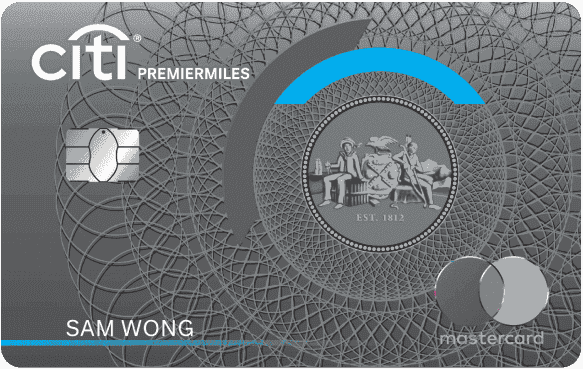
- Local Spend
- S$1 = 1.2 miles
- All Foreign Currency Spend including Retail and Online
- S$1 = Up to 2.2 miles
- Selected Online Hotel Bookings
- S$1 = Up to 10 miles
Snap up baseline gifts: be among the first 200 approved applicants spending S$500 to enjoy S$450 Upsized Cash or a S$500 Amazon.sg Gift Card, or still grab S$400 Cash or 6,140 SmartPoints (use SmartPoints earned to redeem the latest Apple products on our Rewards Store) if you come after.
But the real treat? Dive into spooktacular Halloween rewards with MoneySmart! Each day, the first 10 fastest claimants snatch exclusive Flash Deal prizes—from iPhone 18 Pro, MacBook Neo, Switch 2, PS5 and more—on top of your baseline reward! T&Cs apply.

OCBC balance transfer
OCBC’s balance transfer is quite transparent. There’s a handy calculator where you key in your loan amount and tenure and it shows you how much you have to repay.
You’d have to be at least 21 years old and a main cardholder of an OCBC credit card or an OCBC EasiCredit account holder to apply for it.

- Cashback on Fuel Spends
- 6%
- Cashback on Everyday Dining
- 5%
- with min. spend of $1,600 per month
- Unlock up to $160 Cashback
Get $200 Cash or 3,000 SmartPoints (enough to redeem an AirPods 5 worth S$219) when you apply and spend a min. of S$400 within 30 days! T&Cs apply.

HSBC balance transfer
HSBC is another one being cagey about its rates. You’ll have to download the app to check the interest rates. But even though I have an account and tried to check on the app, I can’t see the rates as I’m not a HSBC cardholder.
So yep, to be eligible for HSBC’s balance transfer, you have to be the main cardholder of a HSBC credit card.
*Rates, fees and promotional terms can change. Always check the respective bank’s website before applying.
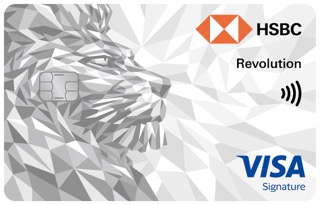
- on Contactless & Online Spending for cardholders who maintain at least S$50,000 average daily balance in your HSBC EGA SGD Account
- S$1 = 20X Points (8 miles)
- on Contactless & Online Spending for all other cardholders
- S$1 = 10X Points (4 miles)
- on All Other Spend
- S$1 = 1X Point
Get Upsized S$430 Cash or 6,140 SmartPoints (use SmartPoints earned to redeem the latest Apple products on our Rewards Store) when you spend a min. of S$500 within 30 days from Card Account Opening Date!
Dive into spooktacular Halloween rewards with MoneySmart! Each day, the first 10 fastest claimants snatch exclusive Flash Deal prizes—from iPhone 18 Pro, MacBook Neo, Switch 2, PS5 and more—on top of your baseline reward! T&Cs apply.

Things to consider before choosing a balance transfer
A balance transfer can reduce the cost of repaying credit card debt, but it is only useful if you understand the full terms and can repay the balance within the promotional period. Take note of the following before getting a balance transfer.
1) A 0% balance transfer is not necessarily free
If the bank charges a one-time processing fee, that fee increases the total amount you need to repay. Compare the fee across different tenures and calculate the effective cost.
2) You must still make minimum monthly repayments
Check the bank’s repayment schedule and make sure you pay at least the required amount by the due date. Missing payments could result in additional charges and may affect your credit record.
3) Take note of the promotional period
If you still owe money when the promotional period ends, the remaining balance may be charged at the bank’s prevailing interest rate or become subject to other applicable terms.
4) Check if early repayment is allowed and if fees apply
Some plans may allow early repayment, while others may impose fees or have specific conditions.
Here’s a quick summary of which credit card balance transfer is the most useful:
Even though many have 0% interest rates, don’t think that it’s fully 0%. There’s still the effective interest rate that affects your repayment amount.
So think carefully if you need a balance transfer or even a personal loan. Of course, we’re not asking you to apply for one just because you want to take a round-the-world trip. These things don’t come for free!
Found this article useful? Share it with your family and friends.
Related Articles