A few weeks ago, my sister was tracking flight prices day in and day out. She was planning a trip to Japan with a friend, and they were trying to get the lowest prices possible by strategically booking their flight at the best time and day. To this, I offered advice I had heard before: book on a Tuesday.
To my recommendation, my sister raised her eyebrow. Tuesday? So far from her tracking, prices hadn't gone down in the slightest on that day. It got me thinking: is the age-old advice to book on Tuesdays still relevant?
Turns out, it isn't. Instead of recycling folk wisdom, we looked at real data from 2 of the biggest names in travel—Expedia's 2026 Air Hacks Report (done in partnership with the Airlines Reporting Corporation) and Skyscanner's own 2026 Singapore data. Here's how to figure out when you should actually be booking your next flight.
[ms-toc title="Best Time to Book Cheap Flights: A Data-Backed Guide"]
TL;DR |
|---|
|
1. What actually moves flight prices
Before we get into specific days and months, it helps to understand why prices swing around so much in the first place. Airlines price dynamically based on how much competition exists on a route, how far out you're booking, and how close you are to a peak travel period. That's why the same Singapore–Tokyo flight can cost $400 one week and $700 the next, even if nothing else about your trip has changed.
Expedia's 2026 Air Hacks Report, now in its 10th year running with the Airlines Reporting Corporation, is one of the largest datasets tracking these patterns globally—which makes it a solid anchor for understanding the mechanics, even if some of its specific figures are US-centric (more on that below).
2. How far in advance should you actually book?
The "sweet spot" for booking depends heavily on how far you're actually flying. Here's what the data shows:
- Short-haul and regional trips (think Bangkok, Bali, Kuala Lumpur): Expedia's data shows the most affordable international booking window is 8–15 days before departure, saving around 28% compared to booking 180 or more days out. If you'd rather not cut it that close, booking 31–45 days out still saves around 23%.
- Long-haul flights (think Europe, the US, or Australia): The Points Guy's 2026 booking guide recommends booking 3–6 months ahead for flights to Europe, since longer routes tend to follow slower demand curves than a quick regional hop.
These figures come from US-based travel data, but the underlying mechanics apply just as well from Singapore: airlines everywhere use dynamic pricing systems that respond to demand and competition on a route, not the departure city. So while the exact percentages might shift slightly for SIN-originating flights, the booking windows above are still a solid benchmark to work from.
The upshot? If you're eyeing a regional trip, you likely don't need to book as far ahead as everyone assumes. If you're headed further afield, the old "book months in advance" advice still holds.
3. Is there really a cheapest day to book—or to fly?
Here's where things get interesting. For years, Sunday (or Tuesday, depending who you asked) was crowned the cheapest day to book flights. Expedia's 2026 Air Hacks Report just flipped that on its head: Friday is now the cheapest day to book a flight overall, and also the cheapest day to actually fly, at up to 8% cheaper than flying on a Sunday.
Closer to home, though, Skyscanner's own 2026 Singapore data tells a slightly different story: Sunday is, on average, the cheapest day of the week to fly out of Singapore. Skyscanner's separate Smarter Summer Report also found that the "best" day varies quite a bit by destination—Wednesday for Tokyo and Seoul, Tuesday for London, Monday for Bangkok, and Sunday for Denpasar.
The takeaway isn't "book on this exact day, always." It's that the old universal rules don't really hold anymore. If you're flexible, it's worth checking prices across a few different days for your specific route rather than assuming one day is always cheapest.
4. Cheapest months to fly from Singapore
Globally, Expedia's data points to August as the cheapest month to fly overall, coming in 29% cheaper than December on average. Locally, Skyscanner's 2026 data for Singapore travellers backs this up with real numbers: their top 10 cheapest destinations from Singapore in 2026 include Phuket (averaging $236 return), Manila ($240), and Denpasar ($247), all based on flights booked between January and October 2025 for 2026 travel.
Skyscanner's Smarter Summer Report adds more detail for the mid-year travel crunch specifically—10–16 August came out as the cheapest week to travel this summer, with June and September also flagged as quieter, better-value alternatives to the July–August peak.
Of course, Singapore has its own predictable price spikes that global data won't capture: Chinese New Year, the June and December school holidays, and National Day long weekends all tend to push fares up. If your travel dates are flexible, shifting even a week outside these windows can make a real difference.
5. Should you book now or keep waiting?
With so much data pointing in slightly different directions, here's a simple way to decide:
- Book now if: you're inside the ideal window for your route type (8–15 days for a regional trip, 3–6 months out for long-haul), your route has limited airline competition, or you've been tracking the price for 2 or more weeks with no meaningful drop.
- Keep waiting if: you're still several months out from a regional trip, prices have been trending down recently, or you have flexibility on your travel dates and haven't yet checked shoulder-season alternatives.
- Either way: set up a price tracker. Google Flights, Skyscanner, and similar tools all offer this, so you're not manually refreshing search results every few days.
6. Time your travel insurance with your flight booking
Here's something the "best time to book" conversation usually leaves out: your flight-booking timing and your travel insurance timing are connected, not separate decisions. Getting travel insurance in place the same day you book your flight means you're covered against exactly the kind of volatility discussed above—if your flight gets rescheduled, delayed, or cancelled before departure, or if you need to cancel your trip altogether.
It's a common misconception that travel insurance can wait until closer to departure. In reality, buying it early is what unlocks benefits like trip cancellation cover, which typically only kicks in for cancellations that happen after your policy's start date. If you're not sure whether you actually need it for your next trip, here's a breakdown of when travel insurance is worth it.

Total Premium
S$25.51
- Med. Coverage (Overseas)
- S$200,000
- Trip Cancellation
- S$7,500
- Loss/Damage of Baggage
- S$3,000
- Total PremiumTotal Premium
S$42.5240% Off - S$25.51
[Your Travel Insurance is on US! ✈️]
Score FREE Travel Insurance when you're the first to submit a MoneySmart Claim Form at 20:00 SGT daily. T&Cs apply.
[Travel with REWARDS]
• Get a S$30 Revolut cash reward with FWD Travel premiums purchased. T&Cs apply
• Enjoy 40% off Single Trip plans and 35% off Annual Travel plans with code FWDJULY. Valid from 28 to 29 Jul 2026.

.png)
Total Premium
S$25.42
- Med. Coverage (Overseas)
- S$200,000
- Travel Cancelation
- S$5,000
- Loss/Damage of Baggage
- S$2,000
- Total PremiumTotal Premium
S$56.5055% Off - S$25.42
[Your Travel Insurance is on US! ✈️]
Score FREE Travel Insurance when you're the first to submit a MoneySmart Claim Form at 20:00 SGT daily. T&Cs apply.
Grab your REWARDS:
• Up to S$20 GrabGift vouchers
• OR up to S$10 Cash via PayNow
• AND S$30 Revolut cash reward
and many more on top of existing discounts with eligible premiums spent.
T&Cs apply.
[Tiq's Online Promos]
• Enjoy 55% off (Single Trip) and 30% off (Annual Plans) with code TIQMS on Tiq Travel Insurance plans. Valid from 6 to 31 Jul 2026. T&Cs apply.
• Spin to score over S$5,000 worth of prizes from Tiq this National Day! Valid till 15 Aug 2026. T&Cs apply.
• Get a $30 voucher from Tiq with code FREETRAVEL on Single Trip plans. New customers only. Valid till 31 Jul 2026. T&Cs apply.

ALSO READ: 2026 Guide: Travel Insurance Singapore—Best Plans Compared
7. Pair it with the right travel credit card
The booking window you land in can also affect which travel credit card makes the most sense for that particular purchase. If you're booking within a tight international window (8–15 days out, per Expedia's data), you're likely paying a premium fare—so a card with strong overseas spend miles or a solid welcome bonus can help offset some of that cost. If you're booking further ahead for a regional trip, a card with good foreign currency rates matters more than a big welcome bonus, since you'll likely be making several smaller purchases (accommodation, activities) between now and departure.
Either way, don't forget that some cards bundle in complimentary travel insurance—worth factoring in before you buy a separate policy.

- on Contactless & Online Spending for cardholders who maintain at least S$50,000 average daily balance in your HSBC EGA SGD Account
- S$1 = 20X Points (8 miles)
- on Contactless & Online Spending for all other cardholders
- S$1 = 10X Points (4 miles)
- on All Other Spend
- S$1 = 1X Point
Get HIGHEST IN MARKET S$460 Cash or 6,140 SmartPoints (worth up to S$649 of Gifts) when you spend S$500 from Card Account Opening Date to end of the following calendar month!
PLUS, double your excitement with a chance to win the ultimate S$15,000 getaway to your dream destination in our exclusive lucky draw! T&Cs apply.

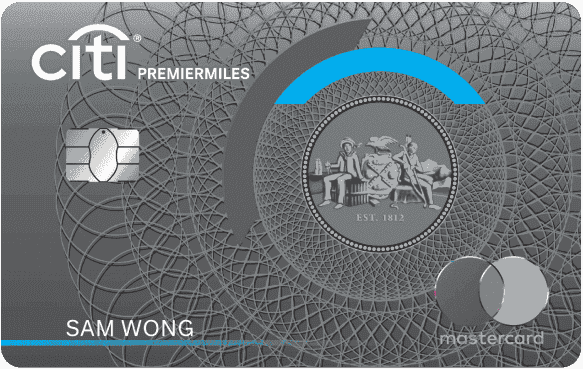
- Local Spend
- S$1 = 1.2 miles
- All Foreign Currency Spend including Retail and Online
- S$1 = Up to 2.2 miles
- Selected Online Hotel and Flight bookings
- S$1 = Up to 10 miles
Get S$400 Cash Reward or 6,140 SmartPoints (worth up to S$499 of Gifts) —just spend S$500 within 30 days of card approval with your new Citibank Credit Card! Receive them as quickly as 5 weeks after meeting the spend criteria.
PLUS, double your excitement with a chance to win the ultimate S$15,000 getaway to your dream destination in our exclusive lucky draw! T&Cs apply.
ALSO READ: 9 Best Air Miles Credit Cards in Singapore (Apr 2026)
Found this article useful? Share it with your most price-obsessed travel buddy.
Related Articles