
More than 250,000 merchants in Taiwan now accept a payment app you probably already have on your phone. Closer to home, lower-wage workers have a fresh set of pay rise guidelines to look forward to, while car buyers are taking stock after the first COE tender since a major review was announced. One local bank is making trips across the Causeway easier on the wallet, home buyers are putting more skin in the game, and the euro is looking wobbly. Here's what you need to know this week.
TL;DR |
|---|
|
Psst, missed last week's issue? View all past editions of What's Happening This Week? to catch up.
[ms-toc title="Issue #93: What's Happening This Week?"]
DBS PayLah! users can now scan to pay at over 250,000 merchants in Taiwan
Heading to Taiwan for the year-end holidays? You may not need to stock up on as much cash for night market snacks. DBS PayLah! users can now scan to pay at more than 250,000 merchants across Taiwan, making DBS the first Singapore bank to connect to the island's TWQR payment network.
You don't need a DBS or POSB bank account to use PayLah!, and the app shows you the amount in Taiwan dollars, the exchange rate, and the final amount in Singapore dollars before you confirm payment.
- Where it works now: About two-thirds of TWQR merchants
- What's coming: The full TWQR network, including JKO Pay merchants, in 2027
- Launch cashback: Up to S$3 when you scan to pay in Taiwan, Malaysia, Thailand, or Indonesia from 16 November 2026 to 31 January 2027, with no minimum spend
The cashback is only for users who haven't made an overseas QR payment on PayLah! in the past 12 months, and it's capped at 20,000 redemptions a month—so don't leave it too late.
.png)
- on your top 2 local spend categories every month
- Up to 5% Cashback
- & 5-year annual fee waiver
- 0 FX Fees
- Flexibility to choose your reward preference every month
- Miles or Cashback
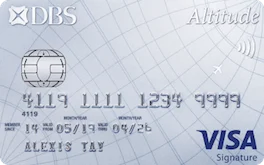
- Local Spend
- S$1 = 1.3 miles
- Overseas Spend (made in foreign currency)
- S$1 = Up to 2.2 miles
- on DBS Points earned
- No Expiry
ALSO READ: 9 Best Air Miles Credit Cards in Singapore (August 2026)
NWC recommends 6%–8% pay rise for lower-wage workers
Some good news for workers at the lower end of the pay scale. The National Wages Council (NWC) has recommended that employees earning up to $2,800 a month get a 6%–8% pay rise, or at least $120, for the period from 1 December 2026 to 30 November 2027.
This year's guidelines include a new category for businesses that are struggling and not making money. Only about a quarter of employers fully adopted last year's 5.5%–7.5% recommendation, and the new tier aims to change that.
The guidelines aren't mandatory, but they apply to both the public and private sectors. About 20% of Singapore's resident workforce earns $2,800 or less a month. The NWC also nudged employers to help staff build AI skills, and urged workers to become "AI bilingual" by pairing AI know-how with their existing expertise.
ALSO READ: Civil Service Bonus 2026: Here’s What Singapore’s Civil Servants Are Getting This Year
Cat A and Cat B COE premiums rise in first tender after COE review announced
Car COE prices are climbing again. At the 21 October 2026 COE tender, Category A and B premiums went up after dipping in the previous 2 rounds. It's the first since the Land Transport Authority (LTA) announced a COE review.
LTA has proposed merging Categories A and B into a single car category. Higher-value cars would pay a surcharge on the COE, while lower-value ones would get a rebate. Public feedback closes on 2 November 2026.
Dealers say sales have slowed over the past 2 weeks, but Chinese EV brands still see buyers rushing to commit before EV incentives expire on 31 December 2026. In 2027, the tax rebate for new EVs drops by $10,000. With the Car Expo on 24–25 October 2026, LTA has urged buyers and dealers to bid prudently.
ALSO READ: How to Bid for Your Own Certificate of Entitlement (COE)
OCBC lets you hold up to RM50,000 in its Global Savings Account
If you pop across the Causeway often, this one's for you. OCBC is adding the Malaysian ringgit to its multi-currency savings accounts, making it the first non-Malaysian bank to let customers hold the currency in a Singapore-based personal savings account.
From 23 October 2026, OCBC Global Savings Account (GSA) and Premier GSA customers can convert Singapore dollars to ringgit and earn interest on their balances.
- Holding limit: Up to RM50,000 at any one time
- Interest: 1% p.a. on ringgit balances until 30 June 2027, then 0.5% p.a., with no minimum balance
- Spending: Pay with your linked OCBC debit card in Malaysia, including through Apple Pay and Google Pay
- Cash withdrawals: No foreign exchange conversion fee at Malaysian ATMs if you have enough ringgit in your account, though non-bank ATM operators may add their own charges
The idea is to let you change money when the rate is in your favour, instead of at the money changer before your trip. The GSA lets you hold and manage 11 currencies.

- Base Interest Rate p.a.
- 0.05%
- Max. Interest Rate p.a.
- Up to 4.45%
- Min. Balance
- S$3,000
ALSO READ: 10 Best Savings Accounts in Singapore with the Highest Interest Rates (July 2026)
Home buyers are using more cash and CPF for down payments, even as mortgages grow
Property prices may have climbed, but home buyers aren't simply borrowing more to keep up. Figures shared by OCBC show buyers are putting more of their own cash and CPF into down payments, as mortgages have grown more slowly than prices.
Nearly 8 in 10 OCBC borrowers buying new private launches took out home loans of at least $1 million in the first half of 2026, up from 4 in 10 in 2021. Fewer are maxing out the 75% loan-to-value (LTV) limit—52% of new launch buyers did so, down from 67% in 2021.
Meanwhile, property consultancy ETC recorded 216 mortgagee-sale listings from January to June 2026, within its highest half-yearly auction total since early 2021. ETC says this likely reflects financial strain built up over years, including highly leveraged investors who bought during the 2020–2022 price surge.
ALSO READ: How Much CPF OA Can You Use for Your Property?
Euro nears 3-month low against the Singdollar, and may slide further
Planning a European getaway? Your Singapore dollars are stretching a little further these days. The euro is hovering near a 3-month low against the Singdollar, with €1 worth about S$1.43 on 21 October 2026.
The euro has fallen 4.8% against the Singdollar so far in 2026, after gaining 6.76% in 2025. Analysts point to a few reasons:
- Slower growth: Europe's economy is growing at around 1%, compared with about 5% for Singapore
- Political unrest: Protests over rising living costs and public services have broken out in France, Portugal, and Italy
- Rising costs: Eurozone inflation hit 3.8% in September 2026, while European gas prices have climbed
- A strong Singdollar: The Monetary Authority of Singapore (MAS) continues to let the Singdollar appreciate
One analyst said the euro could slip to S$1.42, or even S$1.40, if it stays below S$1.43. That said, OCBC expects the euro to hold at around S$1.43 in the first quarter of 2027, so don't bank on it getting much cheaper.
ALSO READ: Comparing Digital Multi-Currency Accounts: Wise, YouTrip, Revolut, and More
That's it for this week! Stay tuned for next week's What's Happening This Week to keep up with the latest in finance, business, and beyond.
Related Articles