
This week, Singapore's economy is having a moment—GDP forecasts got a serious upgrade, and exports just posted their strongest first-half showing since 2010, both riding the same AI wave. Life insurers are cashing in too, with premiums jumping over 20% in H1. But not everything's rosy: if you're one of the many still waiting on a driving lesson slot, brace yourself for a fresh surcharge. From a 27% export surge to a $45 premium just to book a weekend slot, here's what moved the needle this week.
TL;DR |
|---|
|
Psst, missed last week's issue? View all past editions of What's Happening This Week? to catch up.
Trust launches the Trust Freedom Card, Singapore's first stockback credit card
Image: Trust Bank
Trust has launched the Trust Freedom Card, Singapore's first credit card to offer stockback, which turns everyday spending into automatic investments. The launch follows Trust's own study, which found that 51% of Singapore residents aged 18 to 40 are actively investing today—but 33% have never invested, citing a lack of confidence and not knowing where to start as the biggest barriers.
Here are some key facts about the Trust Freedom Card:
- Customers earn stockback on every dollar spent; once the accumulated amount hits $10, it's automatically invested into a US stock or ETF chosen from a curated list of 50
- An introductory 3% stockback rate on local and foreign spend runs until 31 December 2026
- Cardholders can switch between stockback, up to 15% bonus cashback, or unlimited cashback of up to 1.5%, every quarter
- Miles will be added as a fourth reward option in a future update
Image: Trust Bank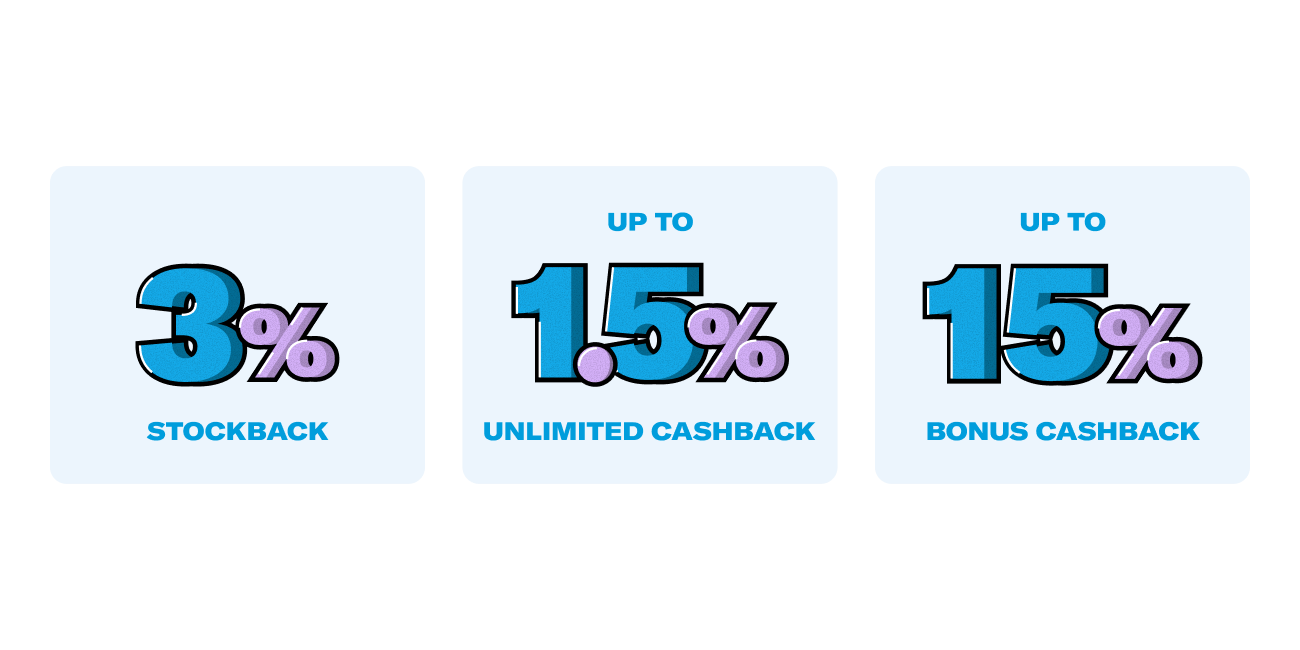
Dwaipayan Sadhu, Chief Executive Officer of Trust Bank, said:
"When we spoke to young Singapore residents, what stood out wasn't a lack of interest in investing. It was that many people felt investing was still too complicated, intimidating or expensive to get started. We wanted to change that. With Freedom, something as simple as buying coffee, groceries or paying for dinner can become a small step towards building wealth. Instead of rewards sitting idle, customers can put them to work in investments that have the potential to grow over time."
If you’re wondering what happened to the Trust Cashback card, the Freedom Card is its upgrade. While adding new ways to get rewarded, such as stockback, it folds in the same familiar features—think a $0 annual fee, 0% FX fees, and the option to use it for a balance transfer. If you're looking at other borrowing options, compare personal loans in Singapore on MoneySmart.
Watch this space for our Trust Freedom Card review, in which we’ll break down how the different modes work and how to decide if this card is for you.
Weekend driving lesson slots open at Bukit Batok, but you'll pay more for them
Learners struggling to book practical lessons at Bukit Batok Driving Centre (BBDC) now have a new option—weekend peak-hour slots—but they come at a premium. Two new windows run on Saturdays and Sundays, from 5.10pm to 6.50pm and 7.20pm to 9pm, with each slot costing $135.16 after a $45 surcharge—about 57% more than a regular peak-hour lesson.
- Around 15 to 20 slots open up each weekend, on a first-come, first-served basis
- Over 100 learners are currently on the wait list
- Regular bookings can mean waits of several months; one recent graduate was offered a slot only in February 2027
BBDC said the surcharge compensates instructors for the extra hours. Demand for lessons remains high even after fee hikes at all 3 public driving centres earlier this year, with nearly 44,520 learners sitting the practical Class 3 test between June 2024 and May 2025. If long waits are a concern, here's how to get your driving licence faster in Singapore.
ALSO READ: How to Get Your Driving Licence in Singapore
Singapore life insurers see 21.4% premium growth in H1 2026 as payouts rise too
Singapore's life insurance industry posted double-digit growth in the first half of 2026, according to the Life Insurance Association Singapore (LIAS). Total weighted new business premiums rose 21.4% year-on-year to $3.63 billion, driven largely by demand for wealth accumulation products.
- Investment-linked policies (ILPs) led new business, making up 44% of premiums, up 24.2% to $1.59 billion
- Participating policies' premiums grew 25.4% to $903 million, holding a stable 25% market share
- Insurers disbursed more than $10.6 billion in claims and maturity benefits in H1, up from $6.4 billion a year earlier
Claims for critical illness, death and total permanent disability rose 11.1% to $1.14 billion. Healthcare coverage also held steady, with about 7 in 10 residents—3 million people—covered by Integrated Shield Plans by June. LIAS attributed the growth to Singapore's strong economic backdrop, giving residents more confidence to plan for the long term.
If you're weighing your own coverage, it's worth comparing your options for life insurance in Singapore before committing to a plan.
Singapore raises 2026 GDP growth forecast to 4.5%–5.5% after strong Q2
The Ministry of Trade and Industry (MTI) has upgraded Singapore's 2026 growth forecast to a range of 4.5% to 5.5%, up from its earlier 2% to 4% projection, citing a stronger-than-expected first half of the year.
- The economy grew 5.9% in Q2 2026, edging past the 5.7% advance estimate but easing slightly from 6.3% in Q1
- First-half GDP growth came in at 6.1% year-on-year
- Growth was driven mainly by manufacturing, wholesale trade, and finance and insurance
MTI said the improved outlook reflects a stronger-than-expected global AI investment boom and a less severe impact from the Middle East conflict than initially feared. Electronics and precision engineering are expected to benefit most from AI-related demand, while sectors tied to oil and travel—like chemicals and food and beverage—remain under pressure. MTI's permanent secretary Beh Swan Gin said growth isn't narrowly dependent on AI, noting that finance, infocomms and construction are also holding up well.
Singapore's exports surge 27.4% in Q2, best first-half showing since 2010
Singapore's non-oil domestic exports (NODX) jumped 27.4% year-on-year in Q2 2026, according to Enterprise Singapore, as global AI-related demand drove a sharp rise in electronics shipments. This builds on 9.6% growth in Q1, pushing first-half NODX growth to 18.6%—its strongest first-half performance since 2010.
- Electronic NODX rose 88.1% in Q2, led by disk media products (up 182.5%), integrated circuits (up 91.9%) and personal computers (up 79.8%)
- Non-electronic NODX grew 8%, reversing a 3.5% contraction in Q1
- Exports to Taiwan, South Korea and the US—Singapore's top markets—jumped 90.4%, 67.1% and 58.9% respectively
Enterprise Singapore raised its full-year NODX forecast to 14–16% growth but flagged that momentum could moderate in H2 due to high-base effects, along with risks from the Middle East conflict and US tariffs. The trade data landed the same day MTI upgraded its overall 2026 growth forecast, reinforcing that Singapore's economy remains firmly plugged into the global AI cycle.
That's it for this week! Stay tuned for next week's What's Happening This Week to keep up with the latest in finance, business, and beyond.
Related Articles