
It’s been a really busy week—and if you’ve felt like everything from bills to markets has been shifting, you’re not wrong. Electricity prices are creeping up, groceries are getting a bit of relief, and even your Grab ride might cost a touch more.
At the same time, there are some bigger-picture changes worth noting: how Singaporeans are managing debt, what’s happening in the job market, and a rise in scams to watch out for. Plus, the stock market had a bit of a wobble. Here’s a quick roundup of what’s been making headlines—and what it could mean for you.
TLDR;
|
Psst, missed last week’s issue? View all past editions of What’s Happening This Week? to catch up.
[ms-toc title="Issue #66: What's Happening This Week?"]
Electricity prices jump as global energy costs surge
Electricity retailers in Singapore are raising prices by up to 11%, as global energy markets react to ongoing conflict in the Middle East. Households renewing their contracts are already seeing higher rates, with some plans climbing to nearly 29 cents per kWh in recent weeks.
The spike reflects how closely Singapore’s power prices are tied to fuel costs—especially natural gas, which generates about 95% of the country’s electricity.
What’s changing for households:
- Higher electricity plans: Prices rose between 1.2% and 11.3%, depending on retailer and plan
- Real bill impact: About +$10/month for a typical four-room HDB flat
- Fewer perks: Some retailers are cutting rebates or withdrawing discounted plans
Period | Price range (per kWh) |
Before (Feb 27) | 24.88–28.67 cents |
After (Mar 20) | 28.8–29.18 cents |
For now, households on existing contracts may not feel the impact immediately—but higher costs could filter through over time. With energy markets still volatile, retailers are pricing cautiously, and more consumers are locking in fixed-rate plans for peace of mind.
ALSO READ: Compare the Best Electricity Price Plans: Open Electricity Market
Fake gold scams rise as buyers hunt for cheaper deals
With gold prices soaring, more buyers in Singapore are turning to online and secondary markets—only to run into a growing problem: fake gold. Dealers say they’re seeing a sharp increase in counterfeit items, with some reporting up to 50% more cases and spotting several fakes each week.
The surge comes as tight supply and high prices push consumers away from traditional retailers and towards platforms like Carousell and Telegram, where verification is harder.
What’s happening on the ground:
- More fakes in circulation: Some dealers report up to a 40% increase in counterfeit items
- Online demand rising: Searches for gold listings jumped 17% year-on-year
- Convincing replicas: Fake bars may come with certificates, serial numbers and realistic packaging
Why buyers should be careful:
- Some fakes use metals like tungsten or copper, making them hard to detect—even with machines
- Prices that seem like a “good deal” are often the biggest red flag
- Private buyers are most at risk, as they lack proper testing tools
Gold may be seen as a safe-haven asset, but this trend is a reminder that where you buy matters just as much as what you buy. Sticking to reputable dealers—and being wary of deals that look too good to be true—can go a long way in avoiding costly mistakes.
MoneySmart March Gold Rush—Win real gold!Thinking of making your next big move in gold? Here’s your chance to win actual gold bars with MoneySmart’s March Gold Rush Madness Promotion.
From 10 Mar to 9 Apr 2026, simply apply for selected credit cards through MoneySmart and you’ll stand a chance to win a 10-gram gold bar (worth over $2,300 each). Three winners will be picked every week—so the odds are shining bright.
Ready to get lucky? Check out the eligible cards and submit your claim after applying. Who knows—your next investment could come with a little extra sparkle this March! |

- on Contactless & Online Spending for cardholders who maintain at least S$50,000 average daily balance in your HSBC EGA SGD Account
- S$1 = 20X Points (8 miles)
- on Contactless & Online Spending for all other cardholders
- S$1 = 10X Points (4 miles)
- on All Other Spend
- S$1 = 1X Point
Get UPSIZED S$430 Cash or 6,140 SmartPoints (worth up to S$499 of Gifts) when you spend S$500 from Card Account Opening Date to end of the following calendar month!
PLUS, double your excitement with a chance to win the ultimate S$15,000 getaway to your dream destination in our exclusive lucky draw! T&Cs apply.
- Local Spend
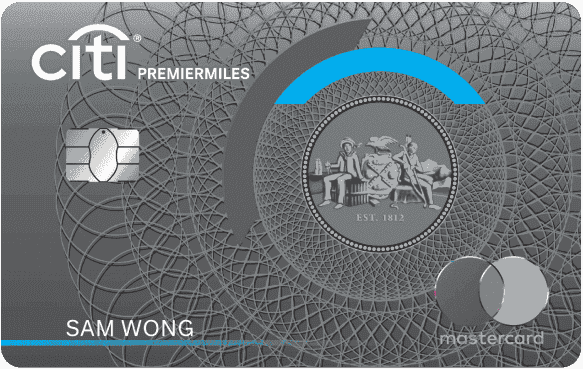
- S$1 = 1.2 miles
- All Foreign Currency Spend including Retail and Online
- S$1 = Up to 2.2 miles
- Selected Online Hotel Bookings
- S$1 = Up to 10 miles
Get S$400 Cash Reward or 6,140 SmartPoints (worth up to S$499 of Gifts) —just spend S$500 within 30 days of card approval with your new Citibank Credit Card! Receive them as quickly as 5 weeks after meeting the spend criteria.
PLUS, double your excitement with a chance to win the ultimate S$15,000 getaway to your dream destination in our exclusive lucky draw! T&Cs apply.
FairPrice rolls out 12 weeks of discounts on everyday essentials
FairPrice Group is bringing back its “Best Sellers for Less” campaign, offering 12 weeks of discounts on popular housebrand staples as cost pressures continue to bite. Running from 19 March to 10 June, shoppers can expect up to 36% off items like rice, cooking oil and facial tissues.
The move builds on growing demand for FairPrice’s own-brand products, which are typically priced 10–15% lower than branded alternatives—and already show up in one in two shopping baskets.
What shoppers can expect:
- Regular deals: Six discounted items released each week over 12 weeks
- Everyday essentials featured: Rice, oil, tissues, and frozen foods among key items
- Solid savings: Discounts of up to 36% on selected products
This campaign is part of a wider push by FairPrice to keep essentials affordable, following earlier initiatives like price freezes and vouchers in 2026. For shoppers, it’s a timely chance to stock up on basics without stretching the wallet too far.
Grab to raise taxi fares slightly as fuel costs climb
Grab will temporarily increase metered taxi fares from 30 Mar 2026 to 31 May 2026, as rising fuel prices continue to squeeze driver earnings. The adjustment applies only to metered GrabCab rides—whether you flag one down or book through the app.
While the increase is modest, it’s aimed at helping drivers cope with higher operating costs without significantly impacting passengers.
What’s changing:
- Slight bump in fares:
Distance and waiting-time charges rise to $0.27 (from $0.26) per unit - No change to flag-down fares:
- $4.60 (4-seater)
- $4.80 (6-seater)
- Small impact per trip:
- ~+$0.08 for a 4km ride
- ~+$0.28 for a 12km trip
- ~+$0.80 for a 30km journey
For commuters, the increase will likely go unnoticed on shorter trips, but it adds up slightly on longer rides. For drivers, however, it offers some relief as fuel prices remain volatile. The move also mirrors similar steps by other taxi operators, signalling a broader industry response to rising costs rather than a one-off change.
Singapore core inflation ticks up to 1.4% in February
Singapore’s core inflation edged up to 1.4% in February—its highest level since December 2024—driven largely by higher prices for food, services and retail goods. The increase follows a 1% reading in January, signalling a slight pickup in underlying price pressures.
That said, overall inflation actually eased to 1.2%, as lower accommodation and private transport costs helped offset the rise in core prices.
What’s driving the increase:
- Food prices: Up to 1.6%, with both dining out and groceries getting pricier
- Services: Rose to 2%, led by higher airfares and travel-related costs
- Retail goods: Slight uptick due to items like health products and furnishings
Inflation type | Jan 2026 | Feb 2026 |
Core inflation | 1.0% | 1.4% |
Overall inflation | 1.4% | 1.2% |
Looking ahead, there are signs inflation could stay firm. Rising global energy prices and import costs may push prices higher in the coming months, even as wage growth and consumer demand remain steady. For now, inflation is still expected to stay within the 1–2% range for 2026—but this latest bump suggests price pressures aren’t fully behind us just yet.
Friday Finance study: Underserved borrowers in Singapore show record repayment discipline
Singapore’s underserved borrowers—those who may lack credit history or face barriers to traditional loans—are proving more financially disciplined than many expect, according to new research by Friday Finance. Analysing 5 years of data, the report finds on-time repayment rates have soared from 36% in 2022 to 86% in 2025, even as borrowing costs remain high.
Key trends highlighted in the study
- Debt consolidation dominates: 20–26% of loans were for consolidating debt, as credit card rollover balances hit a record $9.07 billion in late 2025.
- Purpose-driven borrowing:
- Loans for medical expenses: 7%
- Self-improvement/reskilling loans: 6%
- Business expansion loans (micro-SMEs): dropped to 5%, reflecting economic caution.
- Financial behaviour: Borrowers are managing debt more proactively, using data-driven products that reward on-time payments.
Metric | 2022 | 2025 |
On-time repayment rate | 36% | 86% |
Medical loans (share) | 2% | 7% |
Credit card rollover (bn) | $6B | $9.07B |
The study suggests risk labels for underserved borrowers may be out of date, with many showing robust repayment even under challenging conditions. Smart credit design, like Friday Finance’s on-time payment incentives, is helping more people use credit for stability, not just survival.
ALSO READ: Can You Get a Personal Loan in Singapore with a Bad Credit Score?

Per Month
S$921
- Interest Rate
EIR*: From 11.09% p.a. - From 10.56% p.a.
- Total Amount Payable
- S$11,056
- Processing Fee
- S$800
- Per Month
- S$921
Etiqa–AIA partnership brings takaful to more Singapore customers
Etiqa Insurance Singapore and AIA Singapore have teamed up to make takaful—an Islamic insurance model based on shared risk—more accessible across Singapore. The partnership will see Etiqa’s Shariah-compliant products distributed through AIA’s extensive network of over 6,300 advisers, significantly widening reach beyond its current base.
At its core, this move reflects growing demand for financial products that align with personal values, not just returns.
What this means for consumers:
- Wider access: Takaful products will now be available through one of Singapore’s largest advisory networks.
- More inclusive appeal: While rooted in Islamic principles, takaful is positioned as a transparent, ethical option for both Muslim and non-Muslim customers.
- Stronger awareness push: Expect more education initiatives to help consumers understand how takaful works.
A quick look at the numbers:
Metric | Figure |
AIA adviser network | 6,300+ |
Global takaful market (2025) | $36.5B |
Projected market (2030) | $63.6B |
Growth rate (CAGR) | 11.7% |
The collaboration also signals a broader shift: insurers are leaning into values-based offerings as consumers become more intentional about where their money goes. In short, takaful is moving from niche to mainstream—helped by stronger distribution and growing awareness.
ALSO READ: What is Halal Investment? A Guide to Singapore’s Buzzing Islamic Finance Scene
MOM report: Nearly half of 2025 job openings are newly created roles
Nearly half of job vacancies in Singapore last year were newly created, pointing to continued business expansion and evolving skills demand. According to a Ministry of Manpower (MOM) report, 49.3% of openings in 2025 were new roles, with total vacancies averaging 75,900 for the year.
Many of these roles are emerging in growth sectors like tech, finance and professional services—highlighting how the job market is shifting, not shrinking.
What stands out:
- More new jobs: Up from 45.7% in 2024 to 49.3% in 2025
- PMET roles dominate: 56.3% of vacancies are for professionals, managers, executives and technicians
- Fresh grads have a shot: 21.1% of PMET roles require no prior experience
- Skills over paper: 79.6% of roles don’t prioritise academic qualifications
Job market snapshot (2025) | Figure |
Total vacancies | 75,900 |
Newly created roles | 49.3% |
PMET roles | 56.3% |
Entry-level PMET roles | 21.1% |
The takeaway? While hiring remains cautious, opportunities are still growing—especially for those with in-demand skills like data analytics, software development and AI. The catch is that job seekers may need to stay flexible, as career moves and transitions become more common in a changing market.
Singapore market overview: Week ending 24 Mar 2026
Singapore’s main stock market index—the Straits Times Index (STI), which tracks 30 of the largest listed companies—ended lower this week, closing at about 4,862 on Tuesday after starting Wednesday above the 5,000 mark. The mood was mixed but cautious, with early relief giving way to worries about oil prices, interest rates and conflict in the Middle East.
What moved the market
- A strong start faded quickly. The STI climbed to 5,002 on Wednesday as markets took comfort from stabilising oil prices, but that rebound did not last.
- US interest-rate nerves weighed on Thursday. After the US Federal Reserve kept rates unchanged, markets read its tone as firm rather than reassuring, which pushed Singapore shares lower.
- Oil prices stayed front and centre. Ongoing Middle East tensions kept energy prices jumpy, which made investors more nervous about inflation and slower economic growth.
- Banks pulled on the index. DBS, OCBC and UOB were mixed through the week, but all 3 fell sharply on Monday. That matters because banks make up a big share of the STI, so when they move, the whole index often follows.
- Monday was the roughest session. The STI dropped 2.2% that day, with losers heavily outnumbering gainers, before a small rebound on Tuesday. Daily turnover was mostly around $2 billion to $3 billion, which suggests investors stayed active even as sentiment turned shaky.
Global and ASEAN market impact
Global events mattered a lot this week. Singapore is a small, open economy, so when oil prices rise, US rate expectations shift, or Asian markets swing, local shares usually react too. Regional markets were mostly weak on Thursday and Monday, then steadier on Tuesday, which matched the STI’s ups and downs. Higher oil and gas prices also raised concerns that businesses could face higher costs, while a tougher US rates outlook made investors less willing to take risks.
What this means for everyday investors
- Weekly market swings are normal, especially when global headlines are moving fast.
- Big index moves do not always mean every stock or every part of the economy is doing badly.
- Long-term investors are usually better off focusing on steady goals, not one volatile week.
That’s it for this week! Stay tuned for next week’s What’s Happening This Week to keep up with the latest in finance, business, and beyond.
This article was first drafted with the help of AI and later reviewed and refined by the author.
Related Articles