
Contractors or interior designers (IDs) running away after collecting your deposit, or worse, doing the work halfway then leaving you with a half done house, shoddy workmanship or just endless delays—we’ve all heard about these renovation stories or perhaps some have even experienced them.
This leaves them losing money and subject to breaking HDB’s renovation rules if the contractor does any unauthorised hackings or pulls some stunts.
Unfortunately, most people don’t know where or how to check if renovation companies are good or not. So how can those looking to renovate their homes stay protected?
While there is no single unified site or platform that shows blacklisted renovation companies in Singapore, there are two options that people check before finalising their decision on a renovation contractor—Consumers Association of Singapore (CASE) and HDB.
[ms-toc title="Is Your Renovation Contractor Blacklisted in Singapore? Here's How to Check"]
1. What "blacklisted" actually means in Singapore's renovation industry
When homeowners search for a blacklisted renovation company in Singapore, they are often looking for a master database of bad actors. However, there is actually no single official, national blacklist maintained by the government.
Instead, to check blacklisted renovation companies in Singapore means checking two different organisations that evaluate contractors based on different criteria.
(a) CASE
CASE focuses purely on consumer disputes. While it does not publish a permanent blacklist, it maintains a public Company Alert List and a CaseTrust Watchlist that highlight firms with unresolved complaints, unfair trading practices, or suspended accreditations. CASE also manages CaseTrust accreditation—a voluntary scheme where accredited firms deposit performance bonds to safeguard your money against sudden closures.
(b) HDB
HDB operates the Directory of Renovation Contractors (DRC), a regulatory registry specifically for public housing works. Contractors in the DRC must follow strict structural and safety guidelines. If a contractor accumulates too many demerit points for safety or administrative violations under HDB's Demerit Points System, HDB can delist or suspend them from carrying out works in HDB flats.
The key difference comes down to what each focuses on: CASE reflects consumer complaints and financial fairness, while HDB reflects regulatory compliance and structural safety.
ALSO READ: How to Choose a Renovation Company in Singapore (2026)
2. How to check CASE's records on a renovation contractor
The good thing is that at least there is a database you can check on CASE.
A good rule of thumb is to check CASE's media centre to see if there are any press releases published about renovation companies engaging in unfair practices.
It also maintains a Company Alert List of companies that have had complaints made against them. You can also search by industry and a quick search under Contractors shows 3 blacklisted contractors. Click each name and you can see more details of the complaints against the company.
Contractors on the CASE Company Alert List. (Image: CASE)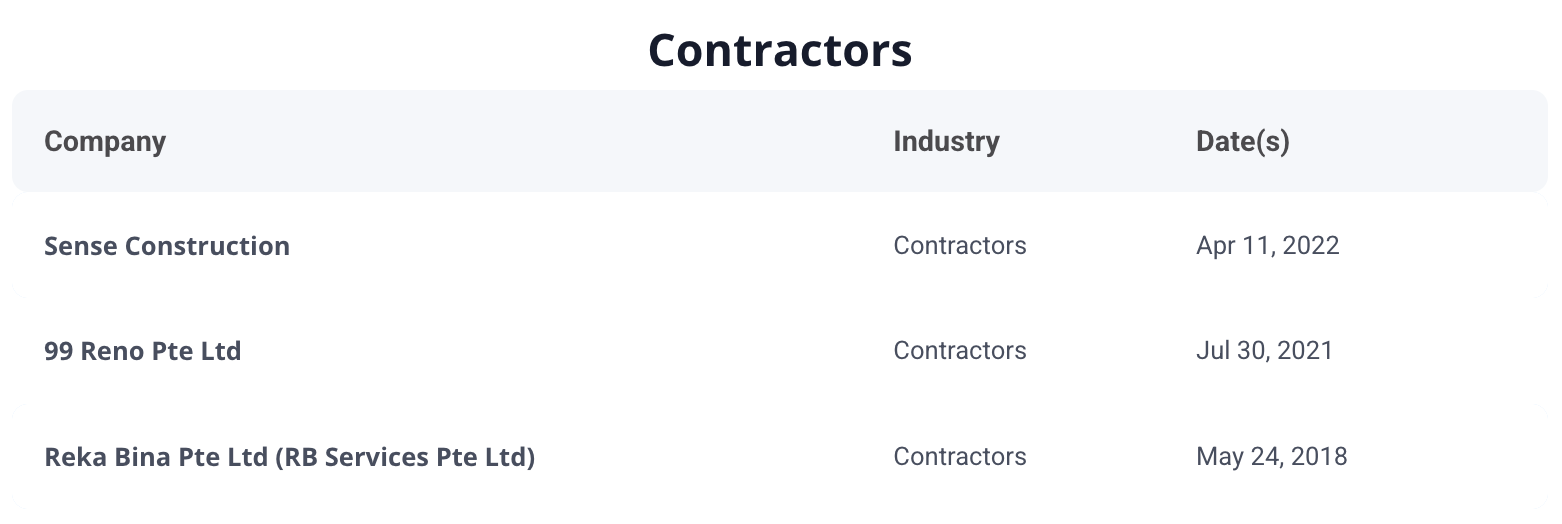
You can also search the CaseTrust Accredited Business Directory by searching for the contractor or interior design firm by name. If they are listed, it means they have been vetted for transparent pricing, clear contract terms, and must protect your deposit via a performance bond.
If a firm claims to be CaseTrust accredited on social media or their website but doesn't show up in this directory, tread with caution.
If a contractor isn't CaseTrust accredited and doesn’t show up on any alert lists, it simply means they are an unaccredited business with no public warnings yet. If you want to be extra cautious, you can submit a direct consumer enquiry to CASE online or via their hotline to check if they have received recent consumer complaints or mediation cases regarding that specific business entity.
3. How to check HDB's Registered Renovation Contractor directory
When engaging a contractor, all contractors have to be registered by HDB and listed on HDB’s Directory of Renovation Contractors. This means that they are aware of the HDB’s requirements when they carry out renovations and to protect the structural integrity of the building. Simply search for your contractor or interior design firm by their registered company name or UEN to confirm that they hold an active registration.
If a contractor is suspended or removed from the DRC, it means they have racked up severe demerit points for safety, administrative, or structural violations.
For a homeowner, working with an unlisted or delisted contractor carries massive risks. Beyond the obvious safety hazards, you could face statutory fines of up to $5,000 under HDB rules, and HDB can even issue a mandatory reinstatement order forcing you to tear down unapproved works entirely out of your own pocket.
However, seeing a contractor listed on the DRC is just the start. You will still need an official HDB renovation permit for works that alter your flat's structure—such as hacking walls, laying new flooring, or modifying plumbing. Make sure your contractor submits the permit application on your behalf via the HDB portal before any hacking or heavy lifting starts. Never settle for verbal assurances and always insist on seeing a copy of the official HDB approval letter confirming that the exact scope of work for your BTO or resale flat is fully authorised.
ALSO READ: Senior-Friendly Home Renovation in Singapore: The Most Affordable Way to Do It
4. Red flags beyond the official registries
Beyond checking CASE and HDB registries, there are also other red flags that should alert you to shady practices.
- If a contractor demands massive upfront deposits or non-milestone payments
- Too cheap packages with vague details
- Not using a corporate bank account
- High pressure sales tactics
- A sketchy profile on Accounting and Corporate Regulatory Authority (ACRA)
5. What to do if you've already engaged a blacklisted or problematic contractor
If work has ground to a halt or your designer has gone MIA after taking your deposit, stop making further progress payments immediately and document everything—from site photos and WhatsApp text trails to signed contracts.
Your first action should be filing a formal complaint with CASE. While CASE acts primarily as a mediator and cannot force a rogue firm to pay up, engaging them puts formal pressure on the business and creates an official record of the dispute.
For monetary claims up to $20,000 (or up to $30,000 if both parties agree), you can escalate the matter to the Small Claims Tribunals (SCT), which offers a fast and relatively inexpensive legal channel without needing a lawyer.
If the dispute involves unauthorised structural works, safety hazards, or an unregistered contractor working on a public housing unit, lodge a direct report with HDB.
Unfortunately, walking away from a toxic contractor mid-project often leaves homeowners in a massive financial bind. Not only are past deposits likely unrecoverable in the short term, but bringing in a new interior designer to rectify shoddy work and complete the job means paying out of pocket all over again.
If you need to take out a loan, check out our comparison of the best renovation loan rates.
Conclusion
At the end of the day, dealing with a nightmare contractor is expensive, stressful, and time-consuming. Making a habit of cross-referencing both the CASE and HDB registries should be a first step before engaging a contractor.
A contractor might have a clean HDB record because they follow structural rules, yet still be flagged by CASE for deposit disputes or terrible service. Be sure to check both!
Found this article helpful? Send it to any friends and family renovating their house.
Related Articles