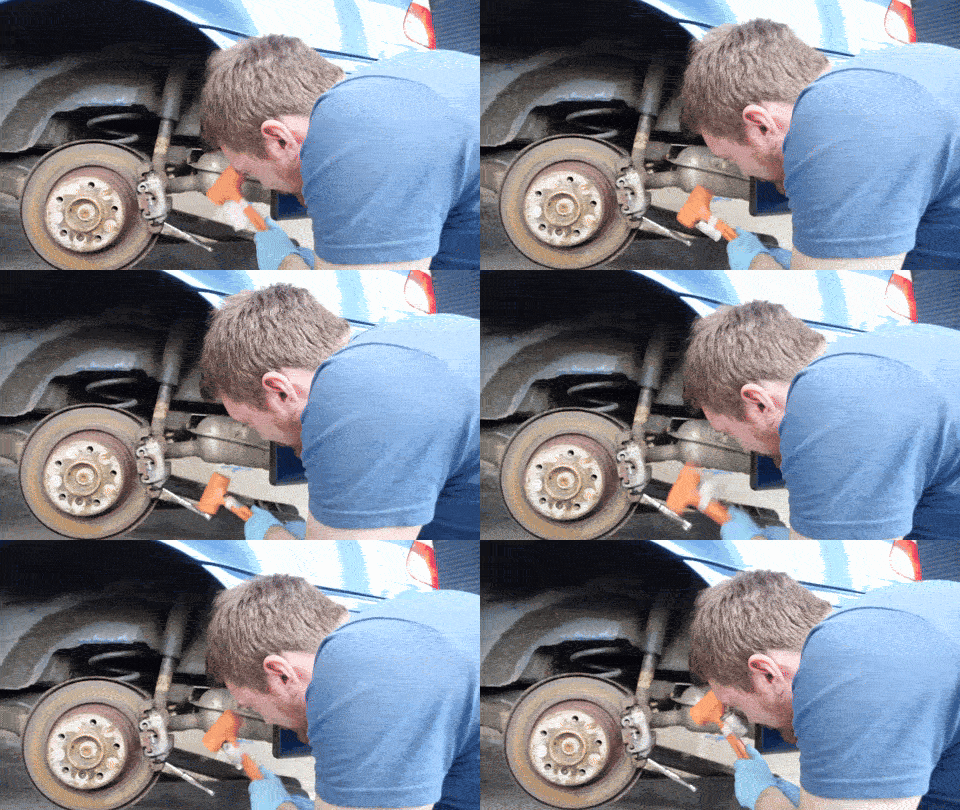
Car ownership in Singapore is expensive—there’s no way around it. But once you’ve committed to it, the smarter move isn’t cutting corners on maintenance. It’s understanding where your money actually goes, and how to control it.
Whether you’re driving a brand-new car or holding onto an older one with a renewed COE, regular servicing is what keeps costs predictable instead of painful.
In this guide, we break down how much car servicing costs in Singapore, what affects your bills, and how to keep them in check.
Understanding car servicing in Singapore
With COE prices staying high, more drivers are keeping their cars longer. That makes maintenance less of a routine task and more of a long-term cost strategy.
Regular servicing keeps your car safe and reliable, but just as importantly, it helps you avoid sudden, high repair bills that can throw off your finances.
If you’re planning to extend your car’s lifespan, it’s worth understanding how servicing fits into the bigger picture—especially alongside costs like COE renewal costs and insurance.
Why regular car servicing is important
Skipping servicing might seem like an easy way to save money, but it usually backfires.
Small issues—like worn brake pads or dirty engine oil—don’t stay small for long. Left unchecked, they can turn into major repairs involving the engine, transmission, or cooling system.
In Singapore, maintaining a typical car costs around S$500–S$800 a year. Over 10 years, that works out to roughly S$5,000–S$8,000.
Compare that to the cost of buying a new car, which can easily exceed S$100,000, and the trade-off becomes obvious. Regular servicing isn’t just about maintenance—it’s about avoiding a much bigger expense.
Common maintenance services
Most servicing costs come from a predictable set of maintenance items, each with its own schedule.
Service | Recommended Interval | Estimated Cost |
Engine oil and filter change | Every 10,000 km or 6 months | S$120–S$300+ |
Brake pad replacement | ~50,000–55,000 km | S$150–S$300+ |
Battery replacement | Every 3–5 years | S$100–S$300+ |
Coolant change | Every ~2 years | S$100–S$150+ |
Transmission fluid | 50,000–100,000 km | S$150–S$300+ |
Timing belt replacement | ~100,000 km | S$800–S$1,200+ |
Disclaimer: The prices listed are rough estimates compiled from various workshop websites and sources. Actual servicing costs may vary depending on your vehicle model, service type, and chosen workshop. Always contact the workshop or dealership directly for accurate quotes.
These are rough estimates, but they give you a baseline for budgeting. Actual costs depend on your car model and the workshop you choose.
What is the average car servicing cost?
There’s no fixed price for servicing in Singapore. What you pay depends largely on your car, where you service it, and how old it is.
Newer cars tend to have lower servicing needs, while older vehicles—especially those past their original COE period—often require more frequent and more expensive work. If you’re maintaining an ageing vehicle, it’s worth factoring this into your overall cost of ownership.
Minor vs major servicing: What’s the difference?
Servicing is typically split into two categories.
Minor servicing is the more routine option. It usually covers engine oil replacement, filter changes, and basic inspections. At an independent workshop, this can cost around S$100–S$200, while authorised dealers may charge closer to S$250–S$335.
Major servicing is more comprehensive. It includes deeper inspections, fluid replacements, and parts checks across key systems like brakes and transmission. For most cars, this ranges from S$200 to S$500, though authorised packages can go higher depending on mileage and model.
Factors affecting servicing costs
Two main factors drive most of the price differences.
The first is your vehicle type. Mass-market brands like Toyota and Honda are generally cheaper to maintain because parts are widely available. Continental brands such as BMW and Mercedes-Benz tend to cost more due to specialised components and labour. Hybrid and electric vehicles sit somewhere in between—they often have lower routine servicing needs, but repairs can be costly when they arise.
The second is your choice of workshop. Authorised dealers follow manufacturer standards and use original parts, but they charge a premium. Independent workshops usually offer more competitive pricing and flexibility, which is why many drivers switch once their warranty period ends.
Cost comparison table
Servicing Type | Vehicle Category | Workshop Cost |
Minor Servicing | Mass-market | S$250–S$350 |
Major Servicing | Mass-market | S$400–S$800 |
Minor Servicing | Luxury | S$400–S$500 |
Major Servicing | Luxury | S$800–S$1,700 |
Routine Servicing | Hybrid/EV | S$200–S$400 |
Note: The figures provided in this table are estimates only and based on authorised workshops. Actual servicing costs may vary depending on the specific workshop, your vehicle model, and the type of service required.
5 Tips to reduce car servicing and maintenance costs
Keeping servicing costs down isn’t about skipping maintenance—it’s about being more deliberate with how you manage it.
1. Regular scheduled maintenance
Following your car’s recommended servicing schedule helps you deal with issues early, before they escalate into expensive repairs.
Many authorised dealers offer prepaid servicing packages that lock in current prices. While they require an upfront payment, they can save you money over time and protect against future price increases.
2. Choosing the right workshop
The right workshop can make a significant difference to your long-term costs.
Look for providers with recognised certifications, experience with your vehicle type, and transparent pricing. A good workshop should be upfront about costs and willing to explain what you’re paying for—no guesswork involved.
3. DIY maintenance
Not every task needs a trip to the workshop.
Basic checks like monitoring tyre pressure, topping up fluids, and keeping an eye on battery health can help you avoid unnecessary servicing visits. These small habits reduce wear and help you spot potential issues earlier.
4. Efficient driving practices
How you drive directly affects how often your car needs servicing.
Frequent hard braking and aggressive acceleration wear out components faster, especially brakes and tyres. Smoother driving reduces strain on your car and can lower your maintenance costs over time.
5. Leveraging promotions and loyalty programmes
Servicing costs aren’t always fixed.
Many workshops run promotions, offer membership perks, or partner with credit cards for rebates. Keeping an eye out for these deals—or sticking with a workshop that rewards repeat customers—can lead to noticeable savings over time.
Using a personal loan for major car servicing and major repairs
Even with careful maintenance, large repair bills can still happen.
When they do, paying everything upfront isn’t your only option. A personal loan allows you to spread the cost over time, which can make expensive repairs more manageable. Compared to credit cards, personal loans typically offer lower interest rates and fixed repayment schedules. This makes them a more predictable way to finance major repairs.
For smaller bills, alternatives like instalment plans or Buy Now, Pay Later schemes may be sufficient—but these tend to be more limited in scope.
Check out the table below to see how it compares to other ways to finance your car repairs.
Financing Option | Pros | Cons | Typical Interest Rate / Cost |
Personal Loan | Fast approval, fixed repayments, suitable for large bills | Requires good credit score | ~1.9%–29.6% p.a. |
Credit Card | Immediate access, reward points | High interest if not repaid quickly | ~25%-29% p.a. |
Buy Now, Pay Later | Interest-free for short-term repayments | Limited to partnered workshops | Varies; often 0% for 3-month plans |
In-House Installments | No bank approval, workshop handles setup | Might be limited to select workshops or mark-ups | 0–15% depending on provider |
Emergency Fund | No interest or fees | Reduces liquid cash buffer | N/A |
Here are some personal loan options that you can consider:

Per Month ²
S$857
- Interest Rates ¹
EIR: From 1.84% p.a. - From 1.00% p.a.
- Total Amount Payable
- S$10,288
- Processing Fee ²
- S$0
- Per Month ²
- S$857

Per Month
S$842
- Interest Rate*
EIR: From 2.28% p.a. - From 1.00% p.a.
- Total Amount Payable
- S$10,100
- Processing Fee
- S$0
- Per Month
- S$842
Sign up via MoneySmart and claim:
Up to S$1,700 Cash via PayNow OR 19,050 SmartPoints (enough to redeem Apple iPhone 17 Pro Max and more) T&Cs apply.
Bonus promotion:
- Use promo code: MONEYSMT
- Get S$10 FairPrice E-Vouchers
- New-to-Trust customers only
T&Cs apply.


Per Month
S$842
- Interest Rate*
EIR: From 1.93% p.a. - From 1.00% p.a.
- Total Amount Payable
- S$10,100
- Processing Fee
- S$0
- Per Month
- S$842
Sign up via MoneySmart and claim:
Up to S$1,700 Cash via PayNow OR 19,050 SmartPoints (enough to redeem an Apple iPhone 17 Pro Max and more)
And get your rewards in as fast as 4 weeks!
T&Cs apply.
Know someone who's about to buy a new ride? Share this with them!

Related Articles