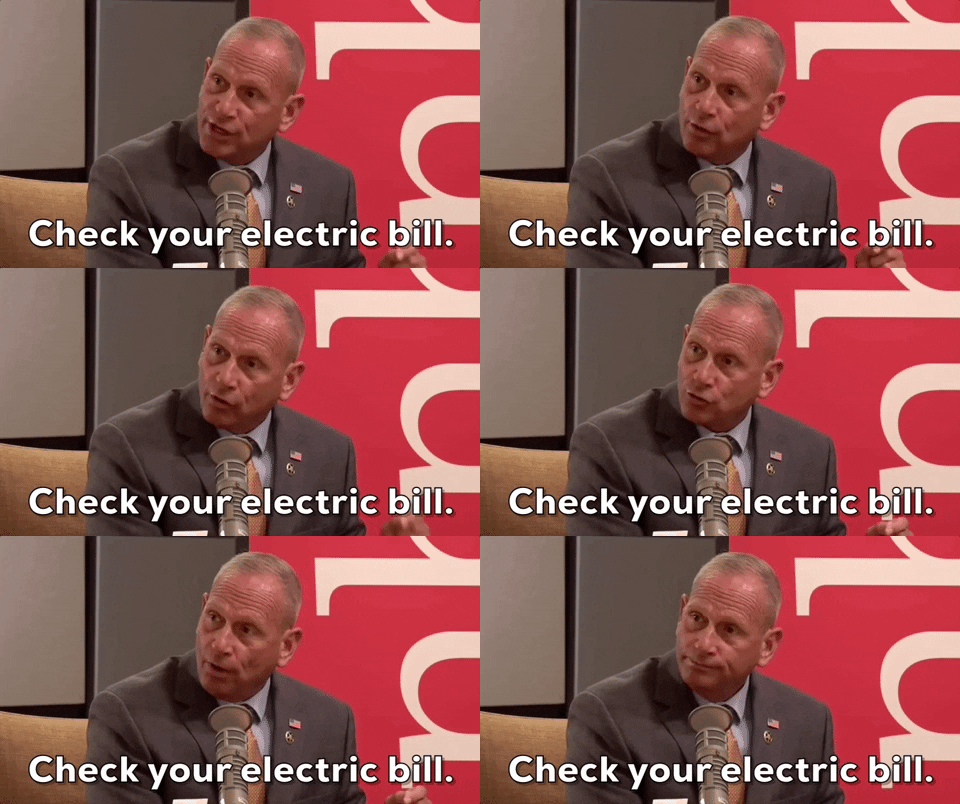
Singapore’s electricity bills are going up again—and it may not be the last increase.
From April to June 2026, the SP Group electricity tariff has increased by 2.1% to about 29.72 cents per kWh from 26.71 cents per kWh, with officials warning that sharper increases could come later in the year.
So if you’re wondering whether to switch electricity providers in Singapore, lock in a plan, or just wait it out, here’s how to decide.
[ms-toc title="Should you change electricity providers? How to decide"]
Why electricity tariffs in Singapore are rising
With the seemingly ongoing conflict in the Middle East, the rest of us in Sweatypore are feeling the brunt of it, no thanks to high oil prices affecting petrol, air fares, transport, gas and electricity.
You’ve heard the news about the government telling us to use fans instead of aircon (and the comments from people about how strongly they feel about that) to save energy and that air conditioning in public will now be set to 25 degrees Celsius or more.
95% of Singapore’s electricity is produced using imported natural gas—and this affects our electricity tariffs in Singapore as the cost of natural gas is linked to oil prices.
Singapore’s electricity tariffs are reviewed every quarterly to reflect the actual cost of producing and delivering electricity, including fuel costs. This means that when global energy prices rise, households in Singapore will eventually feel the impact on their electricity bills.
There is also typically a lag effect. Even if fuel prices stabilise today, higher costs from previous months can still be passed through in upcoming tariff revisions. In other words, what you are seeing now may not yet reflect the full extent of earlier price increases.
Regulated tariff vs Open Electricity Market (OEM): What’s the difference?
Before deciding whether to switch, it helps to understand the two main options available.
1. SP Group regulated tariff
Image: SP Group
If you have never switched providers, you are likely on the SP Group regulated tariff. This is the default plan.
Under this arrangement:
- Your electricity rate is set quarterly
- Prices move in line with global fuel costs
- There is no contract or lock-in period
While this offers flexibility, it also means your bill will increase whenever tariffs rise.
2. Open Electricity Market (OEM) plans
Under the Open Electricity Market, you can choose from a range of electricity retailers offering different pricing structures.
The 2 most common types are:
Discount-off-tariff plans
These plans charge you a fixed percentage below the SP tariff.
This means:
- You will always pay slightly less than the regulated tariff
- However, your bill will still increase when tariffs rise
Fixed price plans
These plans lock in a fixed electricity rate for a set period (usually 12 to 24 months).
This means:
- Your rate does not change even if tariffs increase
- You get predictable monthly bills
However, if market prices fall later, you will not benefit unless you switch again after your contract ends.
Fixed vs variable plans: Which works better now in 2026?
In a rising price environment, the choice between fixed and variable plans becomes more important.
A fixed price plan offers protection against future increases. If tariffs continue to rise, locking in a rate now can help you avoid paying more later. It also makes it easier to plan your monthly expenses.
On the other hand, a variable or tariff-linked plan gives you flexibility. If electricity prices stabilise or fall, you could end up paying less than someone who locked in a higher fixed rate. However, you will also bear the full impact of any future increases.
Should you switch electricity provider now?
Whether you should switch depends largely on your current plan, your usage, and how much certainty you want over your bills. Here are a couple of scenarios to help you decide:
Scenario 1: Staying on the SP tariff
Let’s say you are currently on the SP tariff and use about 400 kWh per month (a fairly typical household).
At the new tariff of 29.72 cents per kWh, your monthly electricity cost would be:
400 kWh × $0.2972 = $118.88 per month
If tariffs continue to rise in the next quarter, this amount could increase further. While you are not locked into any contract, you are fully exposed to price fluctuations.
Scenario 2: Switching to a cheaper fixed plan
Now consider a household that switches to a fixed price plan at around 27.0 cents per kWh.
For the same usage of 400 kWh per month:
400 kWh × $0.27 = $108.00 per month
This results in a monthly saving of about $10.88, or roughly $130 per year, compared to staying on the SP tariff at current rates.
More importantly, if tariffs increase again, this household continues paying the same rate throughout the contract period.
Who should consider switching
Switch | Stay |
If you’re on the SP tariff and want to reduce exposure to rising prices | If you’re on a favourable fixed-rate contract |
Want predictability in your monthly expenses | If your current plan is ending soon—you can choose a different plan depending on how tariffs move |
- | Prefer not to be locked in to a fixed rate |
Timing matters: Lock in now or wait?
Deciding when to switch can be just as important as deciding whether to switch.
Locking in a plan now could help you secure a lower rate before further tariff increases take effect. This is particularly relevant if global energy prices remain elevated.
However, waiting may pay off if prices stabilise or if retailers introduce more competitive plans in the coming months. The trade-off is that you may face higher bills in the interim.
Simple decision framework: Should you switch?
If you’re still unsure, here is a quick way to think about it:
- If you are on the SP tariff – Consider switching to avoid further increases
- If you value stable bills – A fixed price plan may suit you better
- If your contract is ending soon – Compare plans and time your switch carefully
- If you prefer flexibility – A variable plan may still work for you
Keep in mind that electricity tariffs in Singapore have increased and we’ve already been warned to expect a “much sharper increase” in the new July tariff too because of high fuel costs.
If you’re looking to switch, check out our guide on how to Compare the Best Electricity Price Plans: Open Electricity Market (2026).
Switching electricity providers can help you manage costs, but the best choice depends on your priorities. Whether you choose stability or flexibility, it’s best to understand how each option affects your bill in the future.
Want to save even further on your electricity bill? Check out the best credit cards to pay for your electricity and utility bills that will earn you cashback, miles or rewards points.

- cashback on daily spend at McDonald's, Grab, SimplyGo & Shopee
- Up to 10%
- cashback at all grocery spend
- Up to 8%
- cashback cap a year
- Up to S$2,240

- Cashback on Fuel Spends
- 6%
- Cashback on Everyday Dining
- 5%
- with min. spend of $1,600 per month
- Unlock up to $160 Cashback
Get $250 Cash or 3,900 SmartPoints (enough to redeem an Apple AirPods Pro 3 worth S$349) when you apply and spend a min. of S$400 within 30 days! T&Cs apply.
Related Articles