
You've handed in your resignation. You've told your mum. You've updated your LinkedIn to "freelance [insert profession here]." And then—somewhere between your first invoice going unpaid for 45 days and realising your group insurance vanished the moment your final payroll cleared—it hits you: nobody handed you a manual.
Freelancing in Singapore has never been easier to start. But financial planning for freelancers in Singapore? That's a solo mission. When the Platform Workers Act took effect in January 2025, ride-hailing drivers and delivery riders finally got CPF contributions, work injury coverage, and formal representation for the first time. Everyone else—writers, designers, consultants, tutors, tech workers, content creators—is still building their own safety net from scratch.
And it's not a small group. Randstad's latest workforce report shows Singapore talent increasingly rejecting the linear career path.
So here's the three-part toolkit you'll want set up before your next client ghosts you, before you fall sick, and definitely before you turn 45: credit cards, personal loans, and insurance—with expert input from Shirley Tan, Chief Marketing Officer at Etiqa Insurance Singapore. Let's go.
[ms-toc title="Financial Planning for Freelancers in Singapore: Your Essential Toolkit"]
1. Credit cards when your income is lumpy
The catch that trips up new freelancers: most credit cards in Singapore require a minimum annual income of $30,000, and banks want to see stable, salaried numbers on a payslip. If you're freelance, your "salary" is a bank statement, not a payroll slip—and lenders scrutinise it differently.
The good news: you're not locked out. MAS allows banks to issue credit cards with a $500 limit and no minimum income requirement, which is why cards like the GXS FlexiCard exist for people with variable or irregular income. And most major banks in Singapore—American Express, DBS/POSB, OCBC, UOB, Citibank, Maybank, Standard Chartered, and HSBC—do accept self-employed applicants, provided you can show two years of Notice of Assessment (NOA), clean bank statements, or asset-based proof.
What to look for in a card as a freelancer:
- Cashback categories that match what you actually spend on: software subscriptions (Notion, Adobe, Canva), coworking day passes, client lunches, LinkedIn Premium, ad spend. For example, the HSBC Revolution Card gives up to 4 miles per dollar (or 8 if you have savings with HSBC too) on online spend, and the Citi Cash Back Card gives 6% cashback on dining—useful for all those client lunches. It adds up faster than you think.
- No annual fee cards, or ones that waive fees on minimum spend—you don't need another fixed cost.
- Secured credit cards if you're newly freelance and can't meet the standard minimum income requirement. Banks like DBS offer secured credit cards—cards backed by a fixed deposit that acts as your collateral. You'll need to place at least $10,000 in a fixed deposit account with the bank, and in return, you get a card without needing to prove income the usual way. Handy as a workaround while you build up your NOA history.
Compare cashback and no-annual-fee cards on the MoneySmart credit card comparison page to find one that suits your spending pattern.
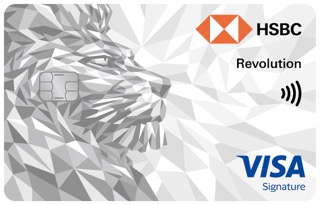
- on Contactless & Online Spending for cardholders who maintain at least S$50,000 average daily balance in your HSBC EGA SGD Account
- S$1 = 20X Points (8 miles)
- on Contactless & Online Spending for all other cardholders
- S$1 = 10X Points (4 miles)
- on All Other Spend
- S$1 = 1X Point
Get HIGHEST IN MARKET S$430 Cash or 6,140 SmartPoints (worth up to S$649 of Gifts) when you spend S$500 from Card Account Opening Date to end of the following calendar month!
PLUS, double your excitement with a chance to win the ultimate S$15,000 getaway to your dream destination in our exclusive lucky draw! T&Cs apply.

- Cash Back on Groceries, Petrol & Private Commute
- Up to 8%
- Total Cash Back Cap, per month
- S$80
- at Caltex, Shell & Esso
- Up to 23.64% savings
Get S$400 Cash Reward or 6,140 SmartPoints (worth up to S$499 of Gifts) —just spend S$500 within 30 days of card approval with your new Citibank Credit Card! Receive them as quickly as 5 weeks after meeting the spend criteria.
PLUS, double your excitement with a chance to win the ultimate S$15,000 getaway to your dream destination in our exclusive lucky draw! T&Cs apply.
ALSO READ: Best Credit Cards for Self-Employed in Singapore
2. Personal loans as the freelancer emergency airbag
Freelance cash flow is a rhythm most salaried workers never have to learn: client invoices you in January, pays you in March, rent is due every month regardless. When a big client stalls or an emergency hits, a personal loan can be the difference between staying afloat and dipping into your retirement runway.
The bad news: lenders often haircut freelancer income by roughly 30% when calculating what you can borrow. So if you're pulling in $5,000 a month, the bank might treat it as $3,500 for loan sizing purposes. You'll also need to prove yourself more than a salaried applicant would—typically two years of NOA, several months of clean bank statements, and evidence of income consistency across that period.
A few things worth knowing before you apply:
- Personal loan vs credit line vs cash advance: personal loans usually have the lowest effective interest rate, credit lines give you flexibility, cash advances are the most expensive—use them only as a last resort.
- Prep before you need it: build 3–6 months of clean bank statements before applying. Freelancer loans reward patience more than urgency.
- When not to borrow: if the shortfall is because a client owes you money and will pay in 30 days, a payment reminder is cheaper than interest. Reserve loans for genuine emergencies.
You can compare personal loan rates across banks to see what you'd actually qualify for.

Per Month
S$842
- Interest Rate*
EIR: From 1.93% p.a. - From 1.00% p.a.
- Total Amount Payable
- S$10,100
- Processing Fee
- S$0
- Per Month
- S$842
Sign up via MoneySmart and claim:
Up to S$1,700 Cash via PayNow OR 19,050 SmartPoints (enough to redeem an Apple iPhone 17 Pro Max and more)
And get your rewards in as fast as 4 weeks!
T&Cs apply.
 (1).png)
Per Month
S$841
- Interest Rate
EIR*: From 1.75% p.a. - From 0.90% p.a.
- Total Amount Payable
- S$10,090
- Processing Fee
- S$0
- Per Month
- S$841
Sign up via MoneySmart and claim:
Up to S$5,725 Cash OR 19,050 SmartPoints (enough to redeem Apple iPhone 17 Pro Max and more) T&Cs apply.
Bonus promotion:
- Up to 1.61% cashback of your loan amount
- Only applicable to loans over S$18,000 with a 3 to 5 year tenure
- New-to-card and new-to-loan customers only
T&Cs apply.
ALSO READ: Best Personal Loans For Freelancers & Gig Workers in Singapore
3. The insurance stack that doesn't disappear when you leave your employer
This is the section most freelancers put off—and pay for later.
When we asked Shirley Tan, Chief Marketing Officer at Etiqa Insurance Singapore, about the biggest protection gap facing freelancers today, she was direct:
"The biggest protection gap we see among freelancers is protecting their ability to earn an income. Many prioritise immediate financial needs but underestimate the impact that illness or injury could have on their income if they are unable to work for an extended period."
— Shirley Tan, Chief Marketing Officer, Etiqa Insurance Singapore
Translation: income protection is often the biggest blind spot for freelancers—crowded out by more immediate financial priorities.
Here's the stack, roughly in order of priority for most mid-career freelancers:
1. Integrated Shield Plan. MediShield Life is your baseline government coverage, but it caps out at B2/C ward-level treatment. An Integrated Shield Plan tops that up so you're not staring at a 5-figure bill if you end up in an A ward or private hospital. Non-negotiable for anyone without employer group cover.
2. Critical illness insurance. A serious diagnosis can knock a freelancer out of work for months. Critical illness insurance pays a lump sum on diagnosis of a covered condition—which you can use to replace lost income, cover treatment costs, or just pay rent while you recover. For the freelancer with no sick leave, this is the most important cash cushion after MediShield.
3. Life insurance with total and permanent disability (TPD) cover. How much you need depends on who depends on you. If you have a partner, kids, ageing parents, or a home loan, life insurance with TPD covers the worst-case financial fallout so your loved ones aren't left scrambling. If you have no dependants and no big debts, it's less urgent—but locking in coverage while you're younger and healthier can still be worth considering, since premiums generally rise with age. For most freelancers, term life is the more affordable format.
.png)
Monthly Premium
S$11.65
- Min. Death and TI Coverage
- S$150,000
- Min. Critical illness Coverage
- S$50,000
- Max. Renewable Age
- 85 (Age Next Birthday)
- Monthly Premium
- S$11.65
4. Personal accident insurance. Cheap and easy to buy, making it a common entry point for freelancers wanting immediate coverage. But there's an important caveat—as Shirley Tan flags, personal accident insurance "generally applies only when the inability to work results from an accidental injury rather than an illness." Think of it as a complement to your other coverage, not a replacement for your health or critical illness plans.
How much should you actually spend on insurance? According to the Basic Financial Planning Guide published by MAS and MoneySense, the rule of thumb is no more than 15% of your take-home income (after CPF contributions) across all your protection—health, critical illness, disability, life. For freelancers without employer group cover doing all the heavy lifting themselves, aim for that ceiling, not the floor.
Shirley Tan also flagged the most common mistake she sees when freelancers first leave full-time employment:
"The most common mistake we see is assuming that the insurance coverage they had as a salaried employee is no longer an immediate priority once they become self-employed. They may focus on earning an income but delay a financial review."
— Shirley Tan, Chief Marketing Officer, Etiqa Insurance Singapore
Don't be that freelancer. If you'd like a proper look at your protection gap, book a free consult with a MoneySmart financial adviser.
4. The 5-point freelancer financial readiness checklist
Screenshot this and pin it somewhere:
- 6-month emergency fund in a high-yield savings account—larger than the standard 3-month recommendation, because your income is lumpier.
- MediSave contributions on track—self-employed MediSave contributions are compulsory if you earn over $6,000 in net trade income annually. Get on IRAS's radar early.
- Two years of clean NOA + bank statements before you need cards or loans. Start now, not the day you need financing.
- Portable insurance stack active—Integrated Shield Plan, critical illness, and either life with TPD (if you have dependants) or personal accident (if you don't).
- Business and personal banking split. Separate accounts make tax filing 10x easier and strengthen your loan applications.
5. The bottom line
Freelancing gives you flexibility, autonomy, and the freedom to skip the 8am MRT crush. What it doesn't give you is the invisible safety net that your last full-time job quietly provided. Rebuilding that net yourself—cards for spend, loans for shortfalls, insurance for the worst case—is the actual work of becoming financially freelance-ready.
Found this article useful? Share it with anyone in your group chat threatening to go freelance.
Related Articles