
If you’re planning on eating healthier in 2026, you’re not alone.
When I asked in our fortnightly newsletter—“Are you planning on eating healthier in 2026?”—many of you said yes IF it’s affordable and efficient.

Image: Pocket Change by MoneySmart
But here’s where we hit a snag: in CBD working areas, the “healthy lunch default” is often a salad or grain bowl that costs more than you expect. For example, The Daily Cut’s build-your-own bowls start at $10.50 and go up to $17.70, depending on size.
So if you’re trying to eat healthier and keep spending under control, lunch becomes one of the easiest places to optimise. It’s a repeated daily expense, which means small improvements add up quickly.
This guide is not about forcing yourself to eat bland salads or cutting out everything you enjoy. It’s about building a simple meal prep system that costs around $4 per serving, helps you eat better, and saves you real money over time.
[ms-toc title="How to save hundreds on lunch even while eating healthy"]
Lunch is a recurring expense, and that’s why it matters
Financial advice often focuses on the big costs—rent, insurance, loans.
But lunch is sneaky because it’s frequent. If you buy lunch 5 days a week, you’re making about 20 lunch purchases a month, and roughly 240 a year.
That’s why lunch is such a powerful budget lever. Even a small reduction makes a difference.
Example: $8 lunch vs $4 meal prep
Let’s say your usual lunch is about $8 (which is putting it pretty mildly once you add a drink, post-lunch coffee, or a small snack).
- $8/day x 20 workdays = $160/month
- $4/day x 20 workdays = $80/month
- Savings: ~$80/month
- That’s ~$960/year (assuming 48 working weeks)
And if your lunch is closer to $10–$15 (think CBD salad bowls), your savings can be much more.
This is where opportunity cost comes in. Money not spent on lunch doesn’t disappear. It becomes money you can redirect elsewhere: an emergency fund, a credit card bill, insurance, or even investing.
What counts as “healthy” for a meal prep system?
Let’s keep this simple. A healthy meal doesn’t need to be perfect. It just needs to be satisfying enough that you don’t end up snack-hunting at 3 pm.
A good baseline:
- Protein (keeps you full)
- Fibre (veg, legumes, whole grains)
- Not overly processed
- Easy to batch-cook
- Cost ceiling: around $4 per serving
That last point matters. The “system constraint” is what makes meal prep a conscious money habit. It replaces an expensive default (buying lunch daily) with a cheaper default (bringing lunch).
The bonus is that it also reduces:
- decision fatigue (“what should I eat?”)
- impulse spending when you’re hungry and busy
- food waste from overbuying ingredients you don’t use
4 recipes under $4: your weekly lunch rotation
These are not just “ideas”. They’re templates you can repeat week after week.
If you want the simplest method: prep 2 recipes a week and alternate. That alone covers most workdays. Costs below are based on current NTUC FairPrice listings. Prices might change but they’re probably going to be in the approximate range.
If you’re buying ingredients from NTUC FairPrice (or any major supermarket), you can stretch your savings further by using a credit card that gives cashback on groceries. Think of it as stacking discounts: you save by meal prepping, then save again when you pay for your groceries.
Here are 3 great options right now:
- UOB One Card – Best if you’re consistent with monthly spending, since higher cashback typically kicks in when you hit specific spend tiers.

- cashback on daily spend at McDonald's, Grab, SimplyGo & Shopee
- Up to 10%
- cashback at all grocery spend
- Up to 8%
- cashback cap a year
- Up to S$2,240
[MoneySmart Offer]
Get guaranteed S$60 Cash - when you are a New-To-UOB customer and spend S$500 within 30 days! T&Cs apply.
Dive into spooktacular Halloween rewards with MoneySmart! Each day, the first 10 fastest claimants snatch exclusive Flash Deal prizes—from iPhone 18 Pro, MacBook Neo, Switch 2, PS5 and more—on top of your baseline reward!


- Cashback on Fuel Spends
- 6%
- Cashback on Everyday Dining
- 5%
- with min. spend of $1,600 per month
- Unlock up to $160 Cashback
Get $200 Cash or 3,000 SmartPoints (enough to redeem an AirPods 5 worth S$219) when you apply and spend a min. of S$400 within 30 days! T&Cs apply.


- Cash Back on Groceries, Petrol & Private Commute
- Up to 8%
- Total Cash Back Cap, per month
- S$80
- at Caltex, Shell & Esso
- Up to 23.64% savings
Snap up baseline gifts: be among the first 200 approved applicants spending S$500 to enjoy S$450 CASH or a S$500 Amazon.sg Gift Card, or still grab S$400 Cash or 6,140 SmartPoints (use SmartPoints earned to redeem the latest Apple products on our Rewards Store) if you come after.
But the real treat? Dive into spooktacular Halloween rewards with MoneySmart! Each day, the first 10 fastest claimants snatch exclusive Flash Deal prizes—from iPhone 18 Pro, MacBook Neo, Switch 2, PS5 and more—on top of your baseline reward! T&Cs apply.

Now that we’ve talked about how you can save, let’s get into the recipes.
Recipe A: Egg fried rice with Veg
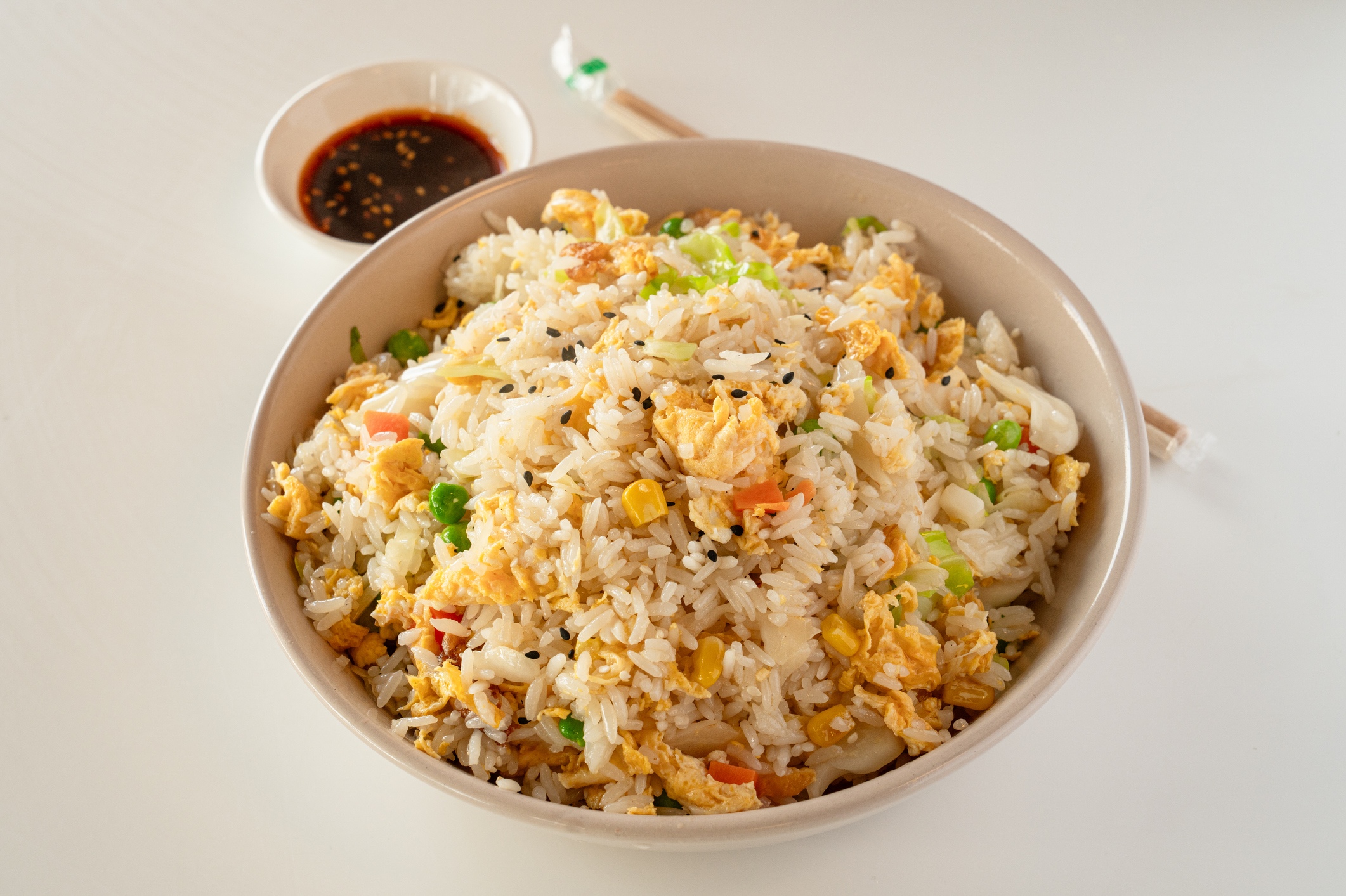
Image: Getty Images
This is a high-value meal because it’s cheap, filling, and easy to customise.
Ingredients (makes 4 servings)
- 2 cups cooked rice (or cook 1 cup uncooked rice)
- 4 eggs
- 300g frozen mixed vegetables
- Garlic, soy sauce, pepper (pantry items)
Steps
- Scramble eggs and set aside.
- Stir-fry frozen vegetables with garlic.
- Add rice and mix thoroughly.
- Add eggs back in.
- Season lightly with soy sauce and pepper.
Cost per serving (estimated)
- Rice: ~$0.20–$0.30
- Eggs (1 egg): ~ $0.22
- Frozen veg (~75g): ~ $0.36
- Pantry estimate: ~ $0.20
- Total: ~ $1.00–$1.30
This is your “anchor meal”. It keeps your weekly average low, so you have room for meals with higher protein costs.
Recipe B: Chicken rice bowl with vegetables
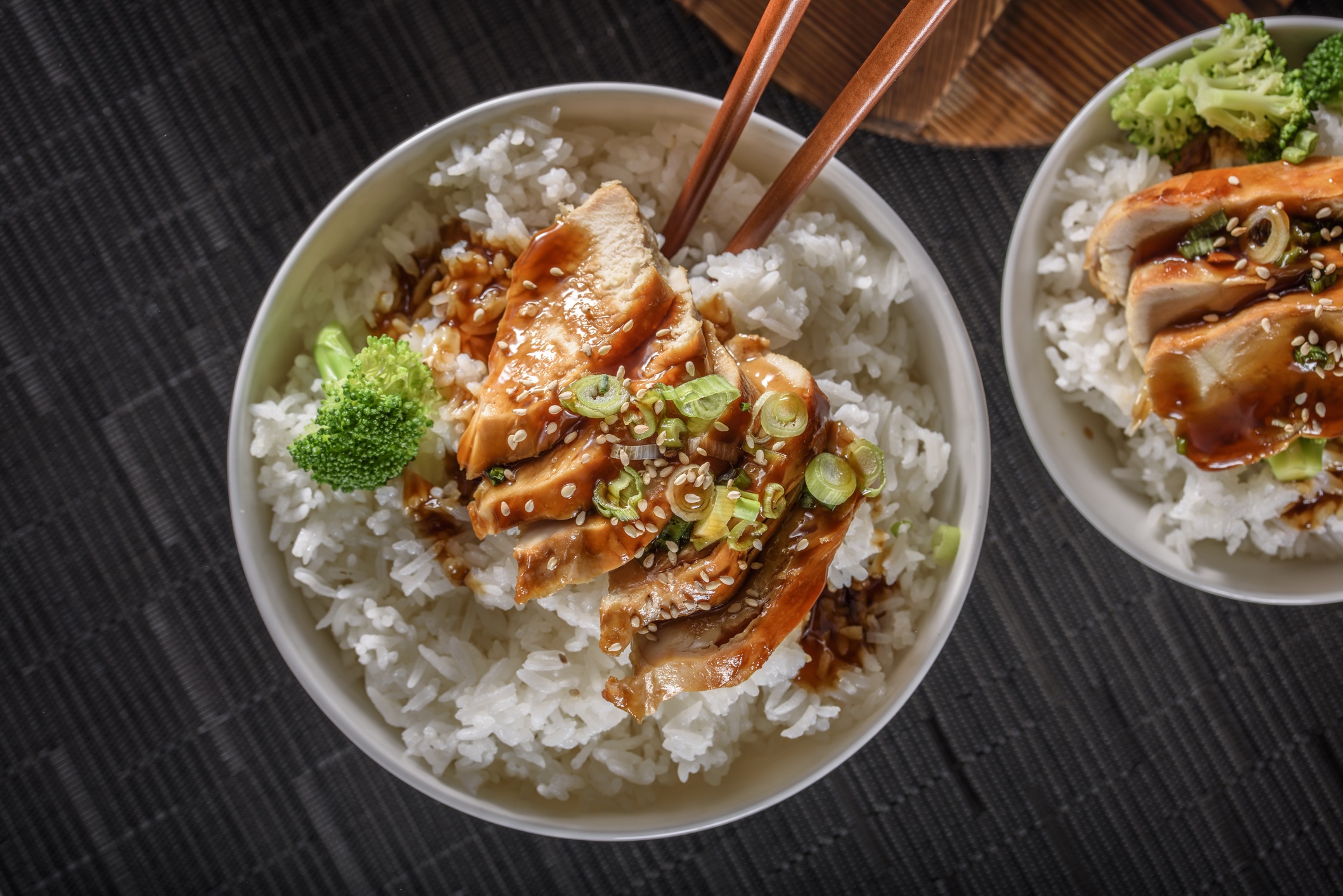
Image: Getty Images
This is the hawker-style system: protein + carb + veg + sauce. It’s also the easiest to repeat without getting bored, because sauces change everything. Another versatile dish imo, mainly because the protein could be switched out and the cost could still be kept fairly low (well, depending on the protein you pick).
Ingredients (makes 4 servings)
- 600g chicken breast (~150g/serving)
- 2 cups cooked rice
- 300g frozen vegetables
- Pantry sauce: soy sauce + sesame oil OR chilli + lime OR sambal
Steps
- Pan-sear or air-fry chicken breast. Slice.
- Bulk-cook rice.
- Heat frozen vegetables.
- Assemble: rice + veg + chicken + sauce.
- Store in containers for 3 to 4 days.
Cost per serving (estimated)
- Chicken (~150g): ~ $2.90
- Rice: ~ $0.25
- Veg (~75g): ~ $0.36
- Pantry estimate: ~ $0.30
- Total: ~ $3.80–$4.00
Recipe C: High-protein stir-fry noodles
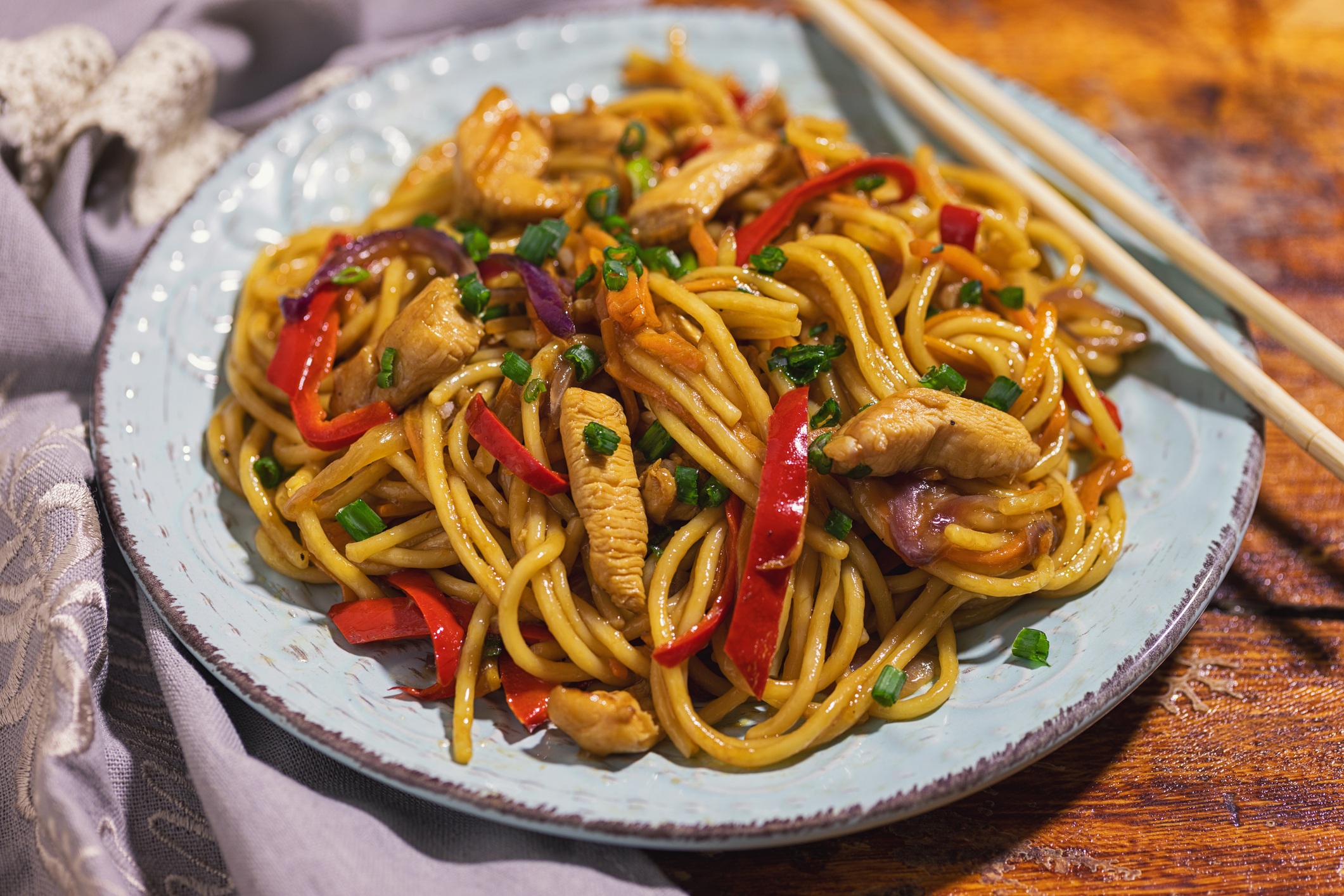
Image: Getty Images
This is the “eat-out replacement” for people who crave noodles. It also works well as a freezer-friendly meal if you portion properly.
Ingredients (makes 4 servings)
- 600g chicken breast or tofu
- 300g frozen vegetables
- Noodles of choice (mee hoon, soba, egg noodles)
- Pantry sauce: oyster sauce + soy sauce + garlic
Steps
- Cook noodles and set aside.
- Stir-fry chicken/tofu until cooked.
- Add vegetables.
- Add noodles and sauce, toss well.
- Portion into containers.
Cost per serving (estimated)
- Protein: ~ $2.50–$3.00
- Veg: ~ $0.36
- Noodles: ~ $0.50–$0.80
- Pantry estimate: ~ $0.30
- Total: ~ $3.70–$4.20
If this lands slightly above $4 sometimes, it still works within the system because the cheaper meals balance the average.
Recipe D: Tofu bibimbap-style rice bowl (the “CBD healthy bowl replacement”)
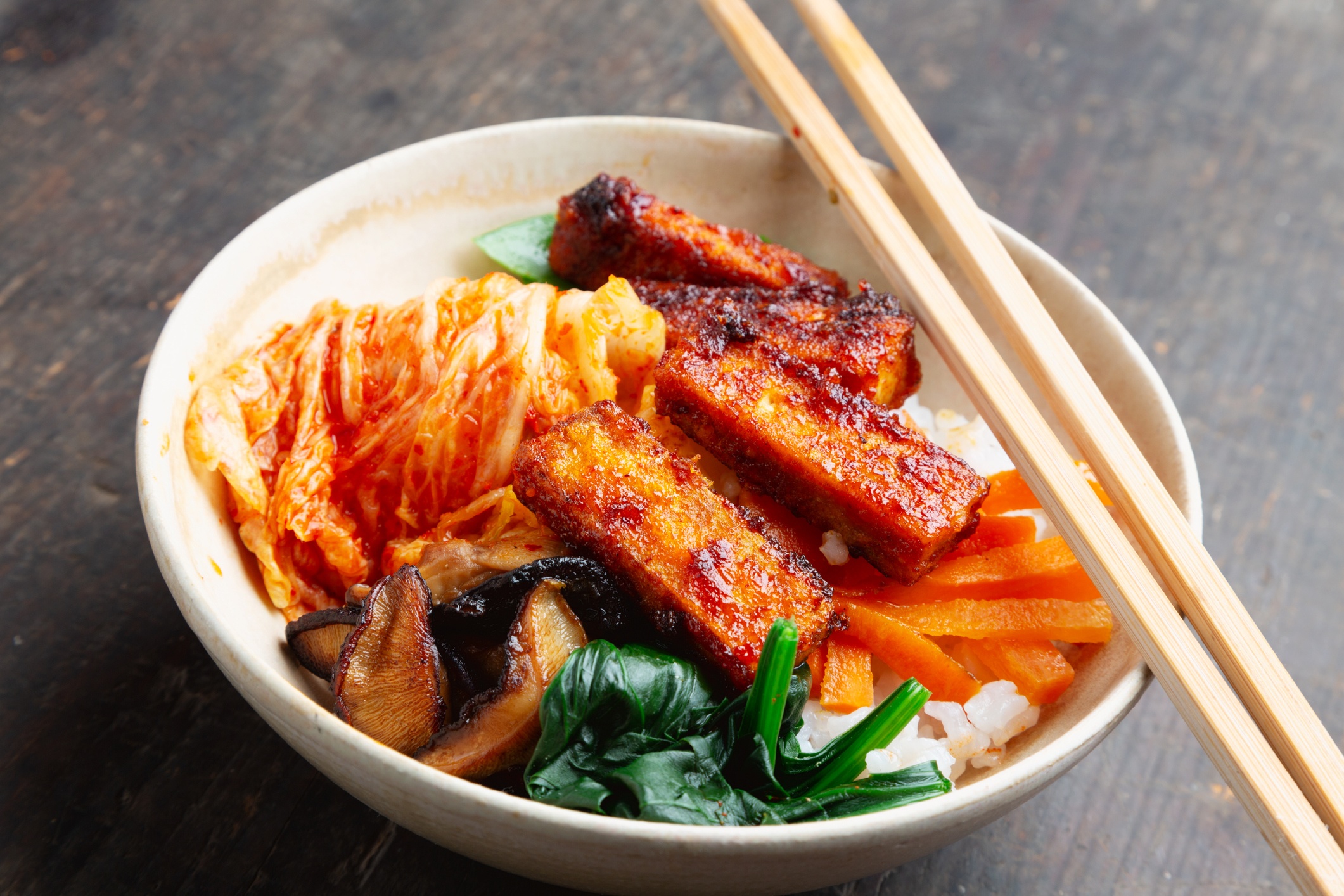
Image: Getty Images
If your usual “healthy lunch” is a $12 salad or grain bowl in the CBD, this is the home version. It’s filling, meal-prep friendly, and still sits comfortably within the $4 system.
Ingredients (makes 4 servings)
- 2 packs firm tofu (600g total)
- 2 cups cooked rice
- 300g frozen mixed vegetables
- Gochujang + soy sauce + sesame oil (for sauce)
Steps
- Cube tofu and pan-fry (or air-fry) until golden.
- Heat vegetables (stir-fry or microwave).
- Assemble bowls: rice + veg + tofu.
- Mix gochujang with soy sauce and sesame oil, then drizzle over.
Cost per serving (estimated)
- Tofu: ~$0.48 per serving (Fortune Chinese tofu 300g is $0.95, so 2 packs is $1.90 ÷ 4)
- Rice: ~$0.25
- Veg: ~$0.36
- Gochujang (10–15g): ~$0.12–$0.18 (CJ Haechandle 500g is $6.01)
- Pantry estimate: ~$0.20
- Total: ~ $1.40–$1.50 per serving
How to use the system so it saves you money
Meal prep only works financially if you keep it simple.
1) Prep 2 recipes a week, not 4
Pick:
- 1 cheap anchor meal (egg fried rice)
- 1 higher protein meal (chicken bowl or noodles)
Alternate them. Done.
2) Use frozen vegetables to reduce waste
Frozen vegetables are usually cheaper than fresh ones in the long run, and you won’t throw them away because they spoil. Yeah sure, you’re compromising on taste a little, but we’re talking about cost efficiency here.
3) Keep your ingredient list small
You don’t need 12 different sauces. You need:
- 1 protein
- 1 carb
- frozen veg
- 2–3 seasonings you actually enjoy OR 1 great sauce
This makes it easier to stick to, which is the whole point.
What your lunch savings can do for your finances
If you save about $4 per lunch with this meal prep plan, you’re saving roughly $80 a month, or about $960 a year. That’s money you can redirect towards things that actually move the needle—building an emergency buffer, reducing credit card reliance, covering your travel insurance premiums, or offsetting rising household costs.
And let’s be real: $4 a day is a conservative estimate. If your CBD lunches often cost $12 or more, switching to a ~$4 lunch means saving about $160–$180 a month (based on 20 workdays). Over a year, that can add up to well over $1,000.
The best part is that you’re not just eating healthier in 2026—you’re building a repeatable habit that keeps both your energy and your spending in a better place.
Disclaimer: This is NOT dietary advice. Everyone has different requirements with regards to what they consume and should ultimately eat what fits them the best.
For more guides and the latest promotions, visit MoneySmart, Singapore’s best and trusted personal finance platform.