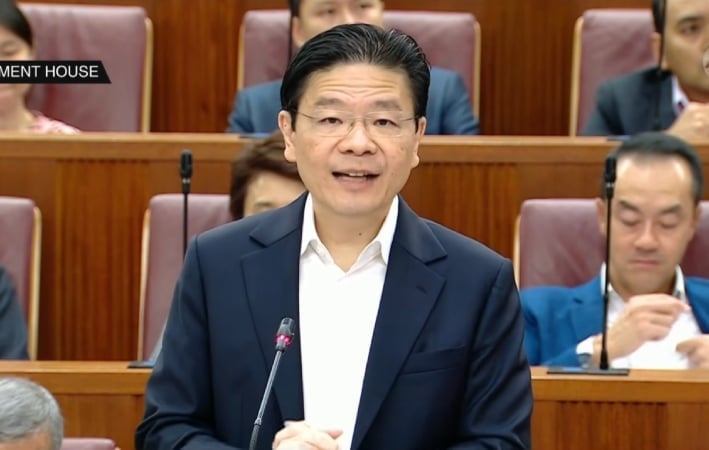
Prime Minister Lawrence Wong has just delivered Budget 2026—the first budget of this new government term. And with global tensions simmering, the cost of living on everyone’s mind, and AI shaking up the way we live and work, it’s no surprise that Budget 2026 tackles these big issues head-on.
From the return of our well-loved CDC vouchers to the 6 months of paid subscription for AI tools, I bet you've heard by now about the payouts and vouchers that Budget 2026 is bringing us. But here’s something you might not know: over the past decade, Singapore’s national budget has almost doubled—from $77.8 billion in 2015 to $147.2 billion last year. And a lot can change in just one year. That’s why we’re here today to break down what’s actually different this time around in Budget 2026 compared to Budget 2025.
Whether you’re looking out for extra payouts, keen on vouchers, or just curious about everyday savings, we’re your money-savvy friend here to guide you through the key changes. Read on to find out what’s bigger, smaller, or just different in Budget 2026—and how it could matter to you.
[ms-toc title="Budget 2026 summary: What’s new this year?" headings="h2,h3"]
For all Singaporeans
[Renewed] Up to $400 Cost-of-Living Special payment
If rising prices are still on your mind, there’s more relief coming your way in 2026. Eligible Singaporeans will receive another round of the Cost-of-Living Special payment—helping you manage everyday expenses a little more easily.
Who qualifies?
- Singaporeans aged 21 and above
- Assessable income up to $100,000
- Do not own more than one property
How much will you get?
- $200 to $400 in cash will be credited directly to your account.
- The amount depends on your income level and property ownership.
When and how?
- Payment will be made to about 2.4 million eligible adults in September 2026.
This is the same amount and structure as the 2024 Cost-of-Living Special payment, so if you received it last year, you’ll know what to expect. (There was no payment in 2025, but Singaporeans did receive SG60 Vouchers that year—$600 for those aged 21 and up, and $800 for seniors—redeemable at hawkers, supermarkets, and more.)
[Enhanced] 1.5 times the regular amount of U-Save rebates
There’s extra help this year for households managing utility bills. Eligible HDB households will enjoy up to $570 in U-Save rebates for the 2026 financial year—that’s 1.5 times the regular amount.
What does this mean for you?
- Up to $570 in U-Save rebates credited to your utilities account with SP Services.
- This amount will:
- Cover about 5 months of utility bills for 1- and 2-room flat households.
- Cover around 2 months of bills for those in 3- or 4-room flats.
Who benefits?
- More than 1 million Singaporean households in HDB flats will receive these enhanced rebates.
When will you receive it?
- The extra U-Save will be credited together with your regular GSTV-U-Save, in April 2026 and July 2026.
This boost means more breathing room when it comes to household expenses, making everyday life a little easier for Singaporean families.
[Reduced] $500 in CDC vouchers for all Singapore households
There’s a change to the CDC vouchers coming in 2026—households will receive $500 in CDC vouchers in Jan 2027. That’s a little less than last year, when households got a total of $800.
How it works
- Every Singapore household will get $500 in CDC vouchers in January 2027.
- Half of the vouchers can be used at participating supermarkets.
- The other half can be spent at participating merchants and hawkers.
What’s different this year?
- In 2025, households received $800 in total CDC vouchers ($500 in May and $300 in January 2026).
- For 2026, only the $500 payout has been announced—no mid-year vouchers so far.
- The vouchers received in Jan 2026 will expire on 31 Dec 2026.
While the amount is lower this year, these vouchers will still help with daily essentials, from groceries to meals at your favourite hawker stall. Keep an eye out for your CDC vouchers when the new year begins.
[New] CPF Board to launch new investment scheme in 2028
Looking to grow your CPF savings but don’t want to actively manage your investments? A brand new CPF life-cycle investment scheme will launch in 2028, making long-term investing simpler—especially for those with less financial expertise.
Who is it for?
- CPF members keen to invest for the long term (e.g. 20 years)
- Especially suited for those who want a hands-off, low-maintenance approach
Key features
- Auto age-based rebalancing: Your portfolio will automatically shift from higher-risk to lower-risk assets as you get closer to retirement.
- Simplified choices: Only 2–3 trusted providers will be selected, each offering a small range of options.
- Lower fees: All-in fees will be capped to keep costs minimal.
Things to consider
- Returns depend on market conditions—there’s always some risk.
- It’s important to match your investment to your risk appetite and how long you plan to invest.
- Prefer no risk? You can always keep your savings in your regular CPF accounts.
- More details on the scheme and products will be shared closer to the 2028 launch.
The government is also prepared to provide some time-limited support to help kick-start the scheme and make it attractive for CPF members early on. This new approach aims to give members an easier, smarter way to build retirement wealth—without the need to be an investment expert.
[New] 6 months’ free access to premium AI tools
Curious about AI but not sure where to start? Budget 2026 has some exciting news—Singaporeans who sign up for selected SkillsFuture AI courses will get 6 months of free access to premium AI tools to practise and apply what they learn.
What’s changing?
- SkillsFuture website will be redesigned to make AI learning pathways clearer and easier to navigate.
- Singaporeans will find it simpler to choose the right AI courses for their job needs and skill levels.
Free access to premium AI tools
- Sign up for selected courses and get 6 months of free use of advanced AI software—so you can practise, experiment, and build confidence with real tools.
More details will be announced soon, but this is a big step towards helping Singaporeans stay ahead as AI changes the way we live and work.
[Reduced] PARF rebate cap halved
If you’re a car owner or thinking of getting a car, there’s an important change to note. Starting from February 2026, the cap on the Preferential Additional Registration Fee (PARF) rebate will be reduced to $30,000, down from the previous $60,000. The PARF rebate for cars above nine years (but not more than ten) will also drop sharply—from 50% of the Additional Registration Fee (ARF) to just 5%.
What does this mean for you?
- If you plan to deregister your car after nine years: You’ll get a much smaller rebate back—up to $30,000, and only 5% of ARF for cars in that age range.
- If you’re buying a new car: Take note that this affects all cars registered with COEs from the next bidding exercise in February 2026.
- For cars that don’t need a COE for registration: The new lower rebate and cap apply to those registered on or after 13 Feb2026.
Why is this happening?
With more electric vehicles (EVs) on the road—less polluting and cleaner than petrol cars—the need to push for early de-registration has become less urgent. The government is adjusting the PARF rebate to reflect this shift.
Bottom line: If you’re hoping for a big PARF rebate when you eventually deregister your car, the new rules mean less back in your pocket. If you’re planning to buy or deregister a car soon, keep this change in mind as you do your sums.
[Updated] Tobacco duty up by 20%
If you’re a smoker or thinking of buying tobacco products, be aware you’ll be paying more from today. The excise duty on all tobacco products has just gone up by 20%, effective from 12 Feb 2026.
What’s changing?
- The tobacco excise duty applies to all tobacco products—including cigarettes, cigars, and other related items.
- This increase kicks in immediately, following the announcement in Budget 2026.
Why the hike?
- The aim is to discourage tobacco consumption and support public health.
- Tobacco tax revenue already brings in over $1 billion each year ($1.11 billion in 2024, $1.02 billion in 2023, and $1.11 billion in 2022).
The last tobacco tax increase was in 2023 (15% then), which added about $100 million in revenue each year.
For families
[Renewed] Another $500 in Child LifeSG credits
Budget 2026 brings more good news for parents—a fresh round of Child LifeSG credits is on the way.
What’s new for 2026
- Every Singaporean child aged 12 and below will receive another $500 in Child LifeSG credits this year.
- This is the second year in a row that families are getting this boost, on top of the $500 issued in 2025.
Who gets the credits and when
- Credits for children born between 2014 and 2025 will be disbursed in July 2026.
- Children born in 2026 will receive their credits in April 2027.
- Last year, the payout was made in July for kids born 2013–2024, with April 2026 set for those born in 2025.
How and where you can use Child LifeSG credits
- The $500 credits can help with household essentials such as:
- Groceries
- Pharmacy items
- Utilities
- Transportation
- Spend online or in-store: Just use the LifeSG app to access your credits, which can be spent at merchants accepting PayNow UEN QR or NETS QR.
With rising costs, this extra $500 can go a long way in easing everyday expenses—whether it’s groceries, school supplies, or even your next family outing.
[Enhanced] More families to qualify for preschool, student care subsidies with raised income ceilings
Getting support for caregiving just got easier for more families. Here’s what’s changing:
Preschool subsidy income ceiling raised
- From 2027, the monthly household income ceiling for means-tested preschool subsidies will be raised from $12,000 to $15,000.
- More than 60,000 families are expected to benefit.
- If you’re already getting subsidies: You can also look forward to higher subsidies for infant care and childcare.
Student care subsidy income ceiling raised
- The monthly income threshold for Student Care Fee Assistance will rise from $4,500 to $6,500.
- This will help about 13,000 students and their families at centres registered with the Ministry of Social and Family Development.
- The government is also reviewing the student care sector to better support caregiving for primary school children.
Building on past support for families
- The Large Families Scheme (introduced last year) remains available, providing up to $16,000 in extra benefits for every third or subsequent child born from 18 February 2025.
- In Budget 2025, students aged 13 to 16 received $500 top-ups to Edusave accounts, and those aged 17 to 20 got $500 for Post-Secondary Education Accounts (PSEA).
- Note: This year’s Budget does not mention new education account top-ups.
These changes mean more families can access the support they need to manage caregiving and schooling costs, so you can focus on what matters most—your kids and your family’s future.
[Enhanced] Greater ComLink+ support for lower-income families
Support for lower-income families with children is getting a meaningful boost under the enhanced ComLink+ scheme.
What is ComLink+?
ComLink+ pairs families with dedicated family coaches and volunteer befrienders who provide personalised guidance and encouragement as they work towards stability, self-reliance and long-term goals.
What’s changing?
Under the upgraded Progress Packages, families can now receive larger cash payouts and higher CPF top-ups when they hit key milestones—such as maintaining stable employment or ensuring good preschool attendance for their children.
Another important change: a bigger share of these rewards will now be paid out in cash, giving families more flexibility to meet immediate needs while still building up their CPF savings for the future.
With these enhancements, a family with 2 children in ComLink+ could receive around $10,000 per year in combined cash and CPF support during their children’s preschool years.
[New] Quarterly payout for ComLink+ families
- All ComLink+ families will receive a new $500 payout every quarter.
- To qualify, families must actively work with their coaches and take steps towards their agreed goals.
This new quarterly payout provides timely, practical support and encourages families to keep progressing towards greater financial stability.
The updates to ComLink+ will take effect from Q3 2026.
For seniors
[Enhanced] Up to $1,500 CPF top-up for eligible Singaporeans aged 50 and above
Looking out for retirement? Budget 2026 has something just for you if you’re aged 50 or older and have lower CPF retirement savings.
Who is eligible?
To qualify for the top-up (as at 31 Dec 2025), you must:
- Be born in 1976 or earlier (aged 50 and above)
- Have CPF retirement savings below the Basic Retirement Sum ($110,200)
- Not own more than one property
- Live in a property with annual value not more than $31,000
How much will you receive?
- Up to $1,500 will be credited to your CPF Retirement Account (or Special Account if you don’t have an RA) in Dec 2026.
- Support is tiered:
- If your home’s annual value is $21,000 or less and your CPF retirement savings are under $60,000, you’ll receive the maximum $1,500.
- If you have more than $60,000, your top-up will be $1,000.
- If your home’s annual value is above $21,000 but not more than $31,000, you’ll get $500.
Those with the least in retirement savings will receive the most help—making sure support goes where it’s needed most.
Other CPF updates for seniors
- The next step of planned CPF contribution rate increases for senior workers will go ahead in 2027.
- Employers will get help through the CPF Transition Offset, which covers half of the increase in employer contributions.
- Plus, more investment options will soon be available to help CPF members grow their savings.
All these measures are designed to help you feel more secure about your retirement, so you can look forward to the years ahead with confidence.
This article was first drafted with the help of AI and later reviewed and refined by the author.
Found this round-up useful? Share it with your family and friends!
Related Articles